





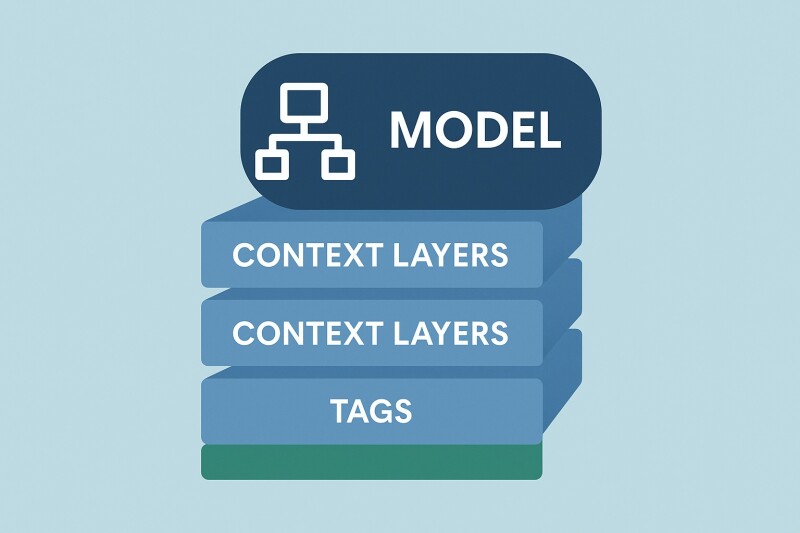
From Tags to Models: Context Layers That Unlock Value
Industrial data becomes exponentially more valuable when structured. Moving from raw tags to semantic models transforms how historians and time-series databases deliver insight — making analytics contextual, not chaotic.
Why Flat Tag Lists Fail
- Duplicated names across sites or systems.
- No awareness of relationships (asset, product, or batch).
- Difficult to query beyond simple trends.
Context Layer Approaches
- ISA-95/88 Hierarchy: Organize data by enterprise → site → area → unit.
- OPC UA Information Models: Add metadata and asset attributes.
- Unified Namespace: Publish contextual topics for all OT events.
How to Build Context
- Start from critical assets or lines.
- Map existing tags to asset IDs and process variables.
- Apply consistent naming and units.
- Expose via APIs for analytics or MES use.
Case Example: Pulp & Paper Plant
Implementing a context layer on top of its historian allowed process engineers to run batch-level OEE and quality correlation — without changing control code.
Related Articles
- Modernizing the Historian: Compression, Context, and Contextualization
- Choosing a Time-Series DB for OT: Requirements That Matter
- Data Retention in Regulated Industries: How to Stay Compliant
Conclusion
Context is the missing layer between sensors and insights. By modeling assets, batches, and relationships, manufacturers turn flat data into actionable intelligence.












Interested? Submit your enquiry using the form below:
Only available for registered users. Sign In to your account or register here.