



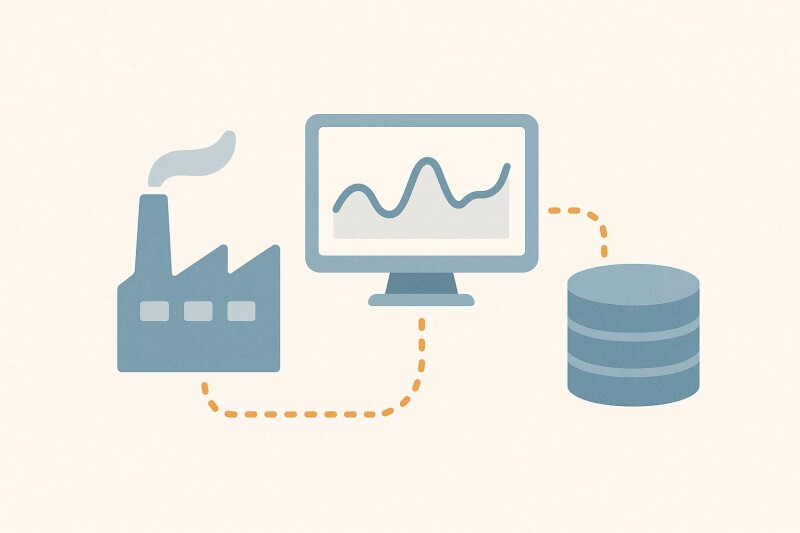
Choosing a Time-Series DB for OT: Requirements That Matter
Not all time-series databases are created equal. In OT environments, performance and reliability often outweigh cloud-native elegance. Selecting the right database depends on data volume, write rate, and compliance needs.
OT vs IT Priorities
- OT: Deterministic writes, high availability, low maintenance.
- IT: Elastic scaling, flexible query languages, and integrations.
Evaluation Criteria
- Write throughput under sustained load.
- Native compression and retention policies.
- Edge buffering and offline synchronization.
- Security: encryption, audit trails, and user isolation.
Popular Options in 2025
- InfluxDB 3.0: Excellent for event-driven analytics and open schema.
- TimescaleDB: SQL compatibility and strong compression.
- OSIsoft PI or AVEVA Data Hub: Proven reliability in brownfield OT.
Case Example: Automotive Supplier
By migrating from a legacy SQL historian to a hybrid Timescale + Kafka setup, data write speed increased by 400%, with full compatibility to MES dashboards and Power BI.
Related Articles
- Modernizing the Historian: Compression, Context, and Contextualization
- From Tags to Models: Context Layers That Unlock Value
- Data Retention in Regulated Industries: How to Stay Compliant
Conclusion
The best time-series database is the one that fits your operational reality. Evaluate based on determinism, compression, and integration — not marketing claims. Your historian’s future depends on it.











Interested? Submit your enquiry using the form below:
Only available for registered users. Sign In to your account or register here.