




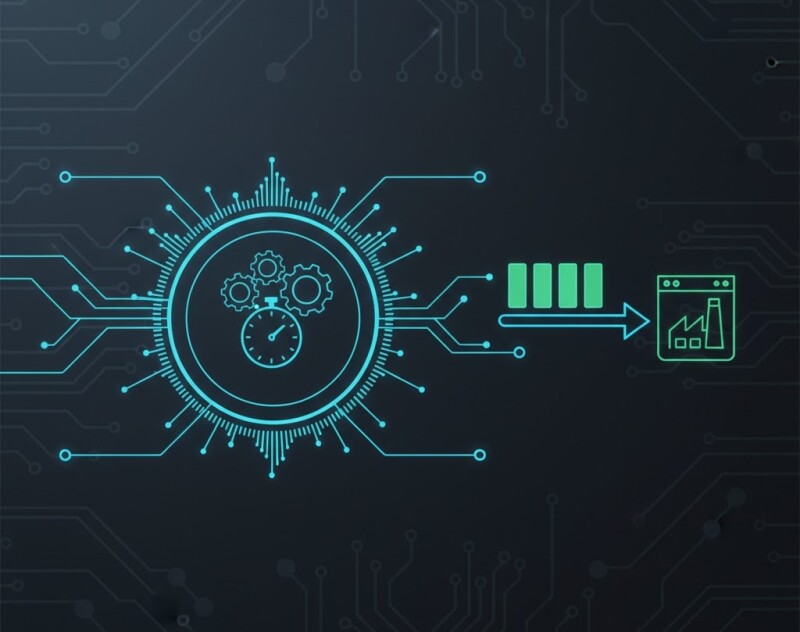
TSN 101 for Controls Engineers: Time Sync and Queues
Time-Sensitive Networking (TSN) extends standard Ethernet to deliver deterministic communication for industrial control. For controls engineers, understanding how time sync and queueing work is essential to designing reliable motion and I/O networks.
Why TSN Matters
Traditional Ethernet was never designed for real-time. Packet collisions, variable latency, and jitter all break deterministic control. TSN solves this by adding time awareness, traffic shaping, and scheduling — while staying fully IEEE and Ethernet-compliant.
Core Mechanisms
- Time Synchronization (IEEE 802.1AS): Aligns all network nodes to within microseconds using Precision Time Protocol (PTP).
- Traffic Scheduling (802.1Qbv): Defines time slots when specific traffic classes can transmit, eliminating contention.
- Prioritization (802.1Qav): Assigns importance levels to control, diagnostics, or background data.
Typical TSN Topology
A TSN-enabled switch coordinates the transmission schedule of PLCs, drives, and sensors. Each frame carries timestamp metadata so all nodes act in sync — critical for synchronized motion or multi-axis robotics.
Example Use Case
A packaging line integrated TSN-capable I/O modules and drives. By synchronizing within ±1 µs, jitter-sensitive vision triggers became stable, improving camera capture consistency by 25%.
Related Articles
- Determinism over Ethernet: What TSN Guarantees (and Doesn’t)
- Lab Testing TSN: Tooling, Traffic, and KPIs
- TSN + OPC UA PubSub: Reference Architectures
Conclusion
TSN is Ethernet reborn for control engineers. Once you master time sync and scheduling, deterministic communication becomes a feature — not a fight.















Interested? Submit your enquiry using the form below:
Only available for registered users. Sign In to your account or register here.