




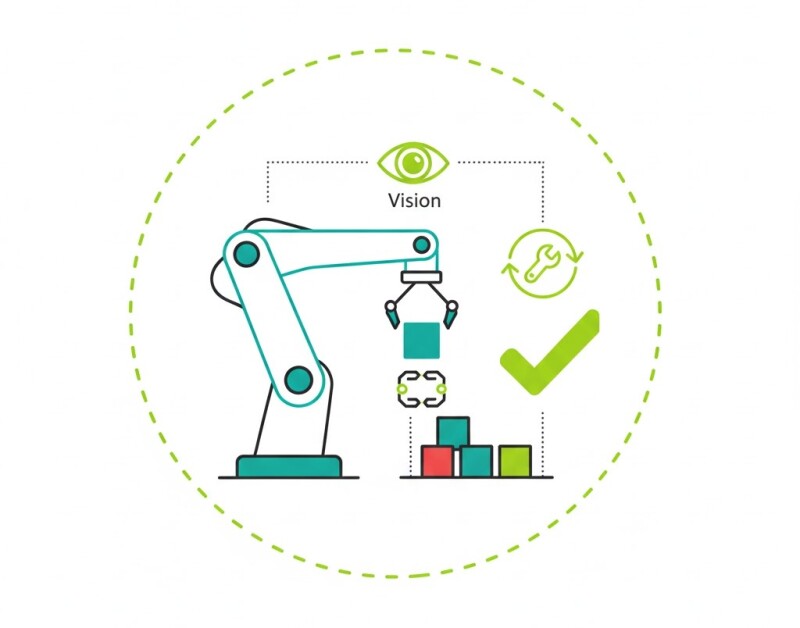
Robotic Picking Accuracy: Vision, Grippers, and Feedback
Picking accuracy defines the success of warehouse robotics. As item diversity grows, robots must handle irregular packaging, transparent surfaces, and deformable items — all without damaging them. The key is a well-tuned combination of vision, grippers, and feedback loops.
Vision Systems
- 2D vision: Fast and cost-effective for flat SKUs and barcoded goods.
- 3D vision: Provides depth perception for bin picking and random layouts.
- AI vision: Classifies materials and predicts grip points dynamically.
Gripper Technologies
- Vacuum and venturi: Ideal for boxes and sealed packs.
- Soft robotic grippers: Handle deformable or irregular items safely.
- Hybrid multi-finger tools: Enable adaptive grasping in mixed-SKU environments.
Feedback and Correction
Real-time feedback — from vision, torque, or tactile sensors — corrects slippage and verifies pick success. Closed-loop control can reduce drop rates by over 90% in dynamic picking systems.
Case Example: 3PL Distribution Center
A third-party logistics site implemented AI-driven grasp feedback for e-commerce picking. Accuracy rose from 93% to 99.2%, eliminating rework in high-mix zones.
Related Articles
- G2P vs G2G: Choosing Your Robotic Picking Strategy
- Slotting Algorithms for E-Commerce Peaks
- Scaling from 1 to 10 Sites: Lessons Learned
Conclusion
Robotic accuracy depends on synergy — not just sensors. When vision, grip, and feedback systems align, robots pick smarter, faster, and more reliably than ever.













Interested? Submit your enquiry using the form below:
Only available for registered users. Sign In to your account or register here.