




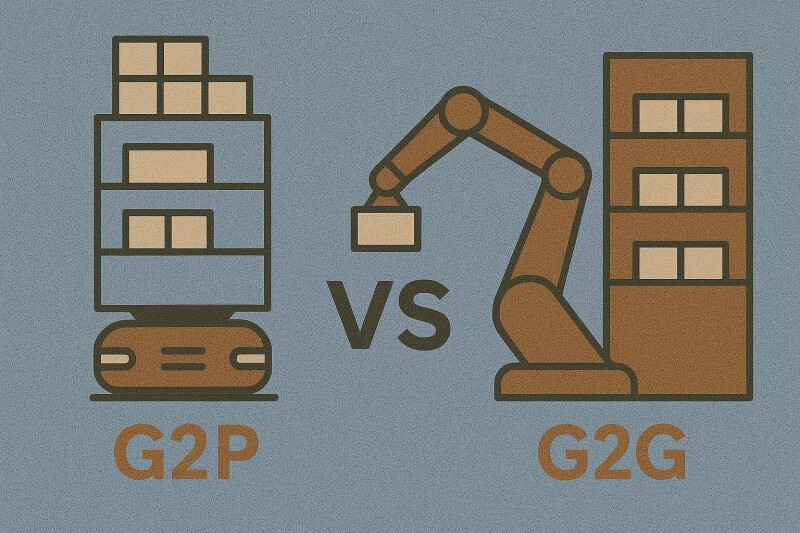
G2P vs G2G: Choosing Your Robotic Picking Strategy
Two main paradigms dominate warehouse automation: Goods-to-Person (G2P) and Goods-to-Goods (G2G). The right choice depends on your SKU profile, order volume, and cost structure — not marketing hype.
Goods-to-Person (G2P)
Robots bring storage bins to human pickers. It’s ideal for high-mix, moderate-volume operations. Benefits include reduced walking time and minimal system complexity.
Goods-to-Goods (G2G)
Fully automated systems where robots pick, pack, and place without human intervention. Perfect for high throughput and stable SKU sets — but costlier and harder to adapt.
Decision Framework
- Order profile: G2P suits 1-5 line orders; G2G excels above 10 lines.
- Labor availability: G2G minimizes human dependence.
- ROI horizon: G2P delivers payback in 18-24 months; G2G often 36+.
Hybrid Models
Many MFCs now deploy hybrid G2P+G2G layouts, using robotic arms only for repetitive items and humans for exceptions.
Related Articles
- Designing a Micro-Fulfillment Center in 90 Days
- Robotic Picking Accuracy: Vision, Grippers, and Feedback
- Scaling from 1 to 10 Sites: Lessons Learned
Conclusion
The best picking strategy is data-driven, not trend-driven. Balance speed, flexibility, and cost — and choose automation that matches your fulfillment DNA.














Interested? Submit your enquiry using the form below:
Only available for registered users. Sign In to your account or register here.