


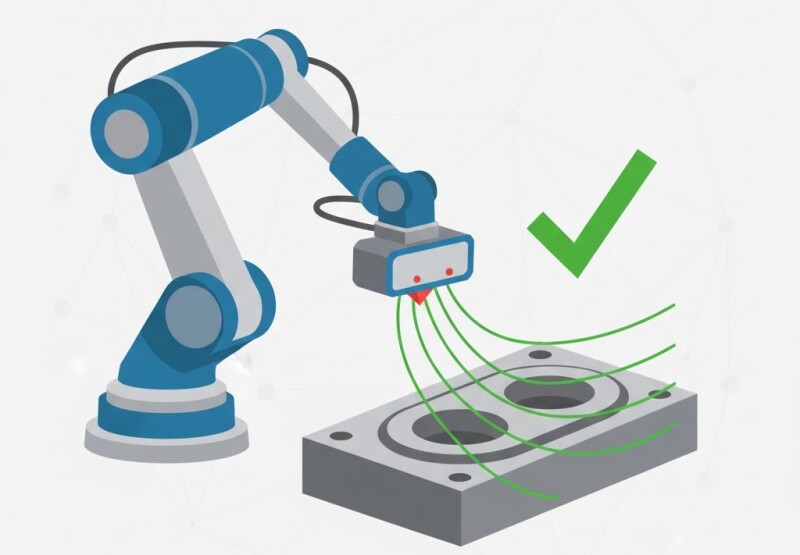
Reducing Measurement Uncertainty with Better Motion
Even the most accurate sensor is useless if the motion system introduces vibration, backlash, or temperature drift. Precision metrology requires controlled motion — mechanical, thermal, and algorithmic stability working together.
1. Sources of Uncertainty
- Mechanical: Stage run-out, bearing play, or belt elasticity.
- Thermal: Material expansion or warm-up drift.
- Dynamic: Settling time before measurement, acceleration ripple.
2. Engineering Out the Error
- Use direct-drive linear motors for minimal backlash.
- Implement feedforward control to compensate for predictable drift.
- Integrate temperature sensors into fixturing for real-time correction.
3. Software Compensation
Modern controllers apply model-based motion correction. When linked with metrology data, it enables sub-micron precision even in production environments.
Example
An optical component manufacturer achieved a 3× repeatability improvement by switching from belt-driven to direct-drive actuators and synchronizing motion with measurement capture.
Related Articles
- Automating Calibration: Schedules, Sensors, and Sign-Offs
- SPC Meets Metrology: Close the Loop on Quality
- Vision-Based Metrology on the Line: Limits and Wins
Conclusion
Reducing uncertainty starts with motion. Precision stages, temperature control, and synchronized acquisition transform metrology from reactive measurement to predictive quality control.














Interested? Submit your enquiry using the form below:
Only available for registered users. Sign In to your account or register here.