





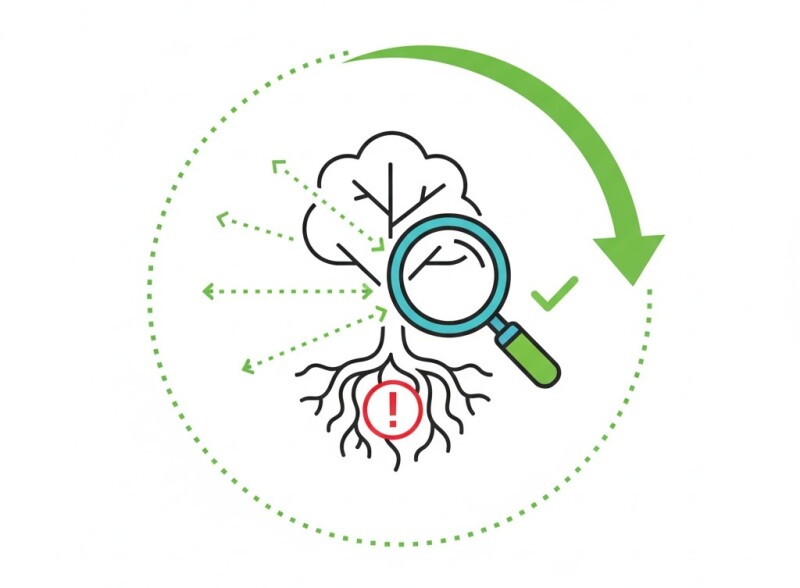
Query Patterns for Fast Root-Cause Analysis
When a production issue strikes, time is everything. Engineers need historian queries that return results in seconds, not minutes. The key lies in designing optimized query patterns for time-series data — with context and performance in mind.
Common Query Types
- Event correlation: Find tag behaviors before and after a fault.
- Trend comparison: Overlay similar batches or shifts to identify anomalies.
- Parameter clustering: Group process variables by outcome (pass/fail).
Performance Techniques
- Use downsampled “summary tables” (e.g., 1-sec, 1-min, 1-hour granularity).
- Pre-aggregate KPIs for known assets instead of recalculating each time.
- Leverage columnar storage and tag indexes in modern time-series DBs.
From Queries to Dashboards
Embed pre-built queries into dashboards so engineers can filter by time window, batch, or product instantly. This empowers self-service analytics without IT dependency.
Case Example: Steel Mill
By optimizing historian queries and caching summary layers, engineers reduced root-cause analysis time from 30 minutes to 90 seconds — enabling real-time troubleshooting.
Related Articles
- Modernizing the Historian: Compression, Context, and Contextualization
- From Tags to Models: Context Layers That Unlock Value
- Data Retention in Regulated Industries: How to Stay Compliant
Conclusion
Fast queries enable fast action. With pre-aggregation, context layers, and event-driven analytics, time-series historians evolve from passive storage to a live decision engine.















Interested? Submit your enquiry using the form below:
Only available for registered users. Sign In to your account or register here.