



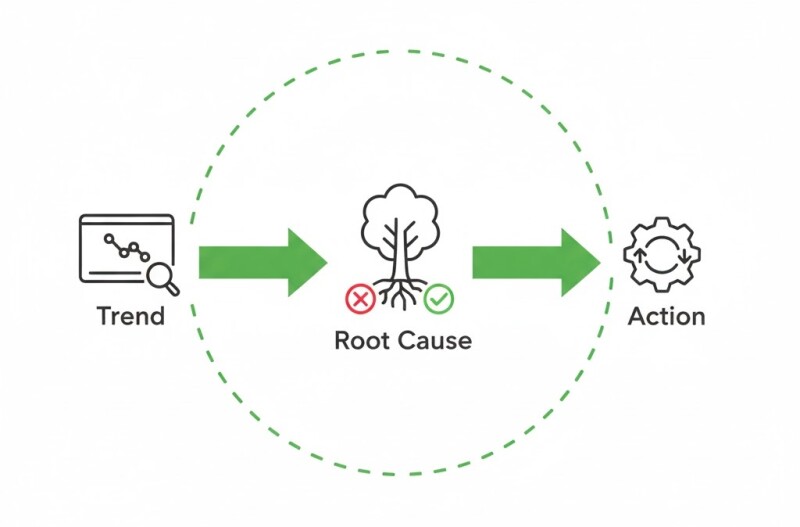
OEE That Drives Action: From Trend to Root Cause
Overall Equipment Effectiveness (OEE) is one of the most used metrics in manufacturing — but often one of the least acted upon. To make OEE actionable, analytics must go beyond numbers and connect directly to root causes and operational decisions.
The Problem with Static OEE
- Weekly reports arrive too late to fix the issue.
- Data entry is often manual or inconsistent.
- OEE values are shown without context or causal insight.
From Trend to Root Cause
Modern OEE systems combine time-series data from PLCs with contextual data (operator logs, batch, product, shift). Using correlation and clustering, the software automatically surfaces likely causes for efficiency drops.
Key Analytics Techniques
- Machine learning for pattern recognition in downtime codes.
- Pareto and Sankey diagrams to visualize loss propagation.
- Automatic anomaly detection on cycle time deviations.
Case Example: Beverage Plant
By moving from Excel-based OEE tracking to an automated analytics dashboard, the plant identified minor stops accounting for 22% of performance loss — previously hidden in aggregated data.
Related Articles
- Changeover Reduction with Data: SMED Meets Analytics
- Loss Trees That Operators Actually Use
- Tying OEE to Profit: A CFO-Friendly Guide
Conclusion
OEE becomes valuable when it guides action. By connecting trends to root causes through real-time analytics, manufacturers move from measurement to improvement — where true ROI happens.










Interested? Submit your enquiry using the form below:
Only available for registered users. Sign In to your account or register here.