





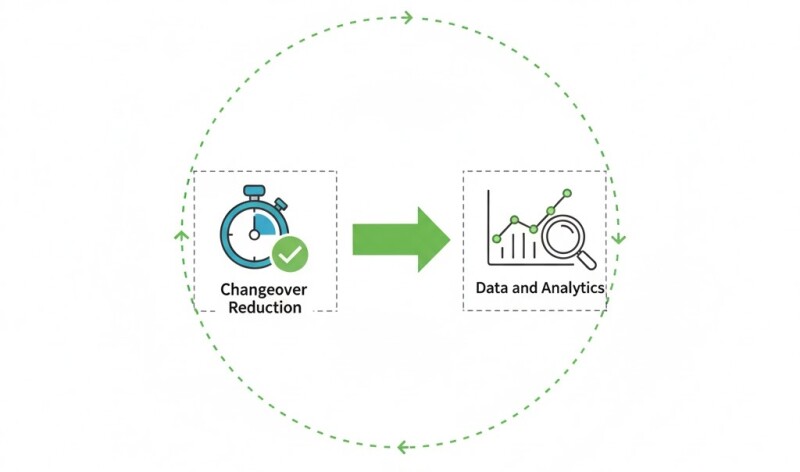
Changeover Reduction with Data: SMED Meets Analytics
Single-Minute Exchange of Dies (SMED) has long been the gold standard for reducing changeover times. Today, combining SMED with digital analytics unlocks even more efficiency — turning observations into quantified improvements.
Where to Start
- Record every changeover event using sensors and operator tablets.
- Tag activities as internal (require stop) or external (can run in parallel).
- Capture timestamps automatically via MES or PLC triggers.
Analytical SMED
Instead of stopwatch-based audits, use digital twins or video analytics to measure delays precisely. Data from motion sensors, torque tools, and barcode scans identifies bottlenecks automatically.
Case Example: Packaging Line
After implementing SMED analytics, a cosmetics manufacturer reduced changeover time by 34% and stabilized OEE fluctuations across shifts.
Key Enablers
- Integrate SMED data into your OEE dashboard.
- Apply heatmaps to visualize idle vs active intervals.
- Gamify changeovers to engage operators with real-time leaderboards.
Related Articles
- OEE That Drives Action: From Trend to Root Cause
- Loss Trees That Operators Actually Use
- Run Rules: What to Alert On (and What to Ignore)
Conclusion
Data-driven SMED blends lean manufacturing with digital precision. With automated timing and analytics, every changeover becomes a measurable opportunity to recover lost production time.















Interested? Submit your enquiry using the form below:
Only available for registered users. Sign In to your account or register here.