




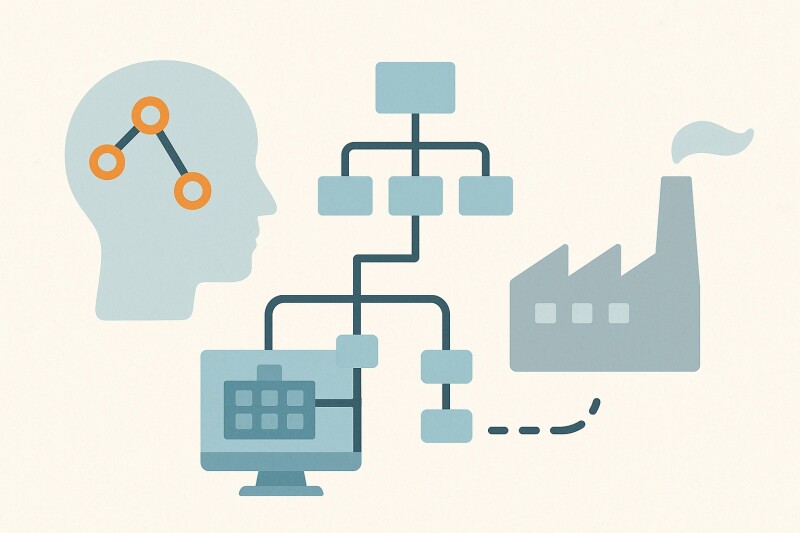
Naming Conventions for UNS: Keep It Human, Keep It Hierarchical
A Unified Namespace is only as usable as its naming scheme. Engineers, analysts, and AI models all depend on consistent, human-readable, and hierarchical naming conventions to find and trust data across plants.
Why Naming Matters
Inconsistent naming is the #1 cause of UNS sprawl. A tag like PL1MTR07 means nothing outside its origin. A name like /Plant1/Packaging/Motor07/Speed tells you everything instantly.
Principles of Good Naming
- Hierarchical: Follow ISA-95 or ISA-88 levels to ensure scalability.
- Human-readable: No abbreviations unless universally known.
- Consistent separators: Use “/” or “.”, but never both.
- Descriptive attributes: Include units or signal type where relevant.
Governance Process
Document naming rules in your data catalog. Assign ownership of each namespace branch (e.g., plant IT, process engineering) and perform quarterly audits to avoid drift.
Case Example: Consumer Goods Manufacturer
By introducing a simple 5-level naming hierarchy and enforcing reviews in Git, engineers reduced tag duplication by 80% and improved dashboard development speed by 3×.
Related Articles
- Designing a Plant-Wide Data Model That Scales
- Data Ownership in OT: Who Owns What, and Why It Matters
- How to Avoid Creating a New Data Silo with Your UNS
Conclusion
Clarity is scalability. A clear, hierarchical naming standard turns your UNS from a technical artifact into a business language — readable by both people and machines.













Interested? Submit your enquiry using the form below:
Only available for registered users. Sign In to your account or register here.