



Data Ownership in OT: Who Owns What, and Why It Matters
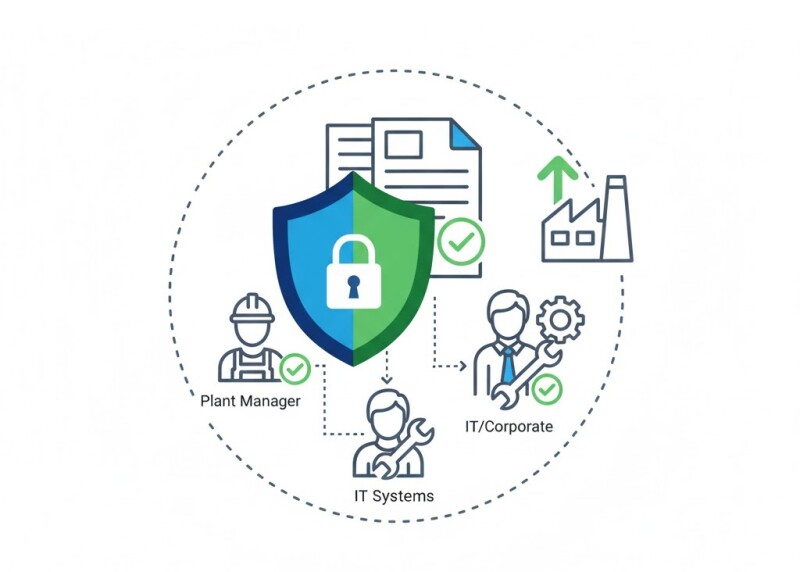
As plants adopt Unified Namespace architectures, data ownership becomes a governance challenge. Without clear accountability, the UNS quickly degenerates into chaos — with multiple “sources of truth” competing for authority.
Why Ownership Is Essential
- Defines who can create, edit, or retire data objects.
- Ensures traceability and auditability for compliance (NIS2, ISO 27001).
- Reduces duplication and integration errors between departments.
Ownership Models
- Centralized: Corporate data team manages all namespaces.
- Federated: Each site manages its own, following global standards.
- Hybrid: Common definitions governed centrally; instances managed locally.
Defining Responsibilities
For each dataset, define the Data Steward (day-to-day accuracy), Data Owner (policy and compliance), and Data Consumer (user). These roles maintain data quality through collaboration — not control.
Case Example: Pharma Group
A global pharma company implemented federated ownership under a single UNS. Local sites owned real-time signals; corporate IT governed master definitions. The model scaled to 28 plants with consistent KPIs.
Related Articles
- Bridging OT and IT: Governance for Shared Data
- Designing a Plant-Wide Data Model That Scales
- How to Avoid Creating a New Data Silo with Your UNS
Conclusion
Clear data ownership transforms chaos into clarity. Defined roles and governance frameworks ensure your UNS remains both trusted and scalable — not just connected.











Interested? Submit your enquiry using the form below:
Only available for registered users. Sign In to your account or register here.