



Least Privilege for HMIs and SCADA: Design Patterns
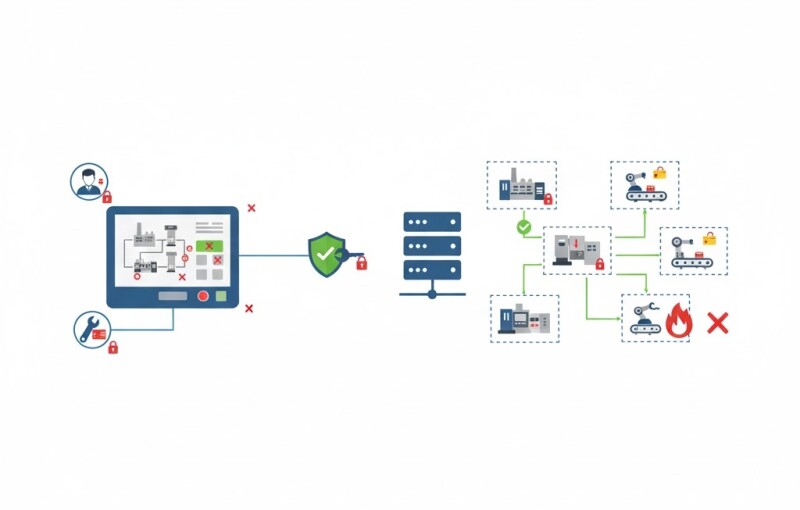
Least privilege means giving each user and process only the permissions needed — nothing more. In HMIs and SCADA, it’s the foundation of both safety and Zero Trust.
Key Principles
- Separate roles for operations, maintenance, and engineering.
- Disable shared “operator” logins; use named accounts with MFA.
- Restrict write privileges to engineering consoles only.
Technical Controls
- Integrate SCADA authentication with AD/LDAP for centralized policy.
- Apply least privilege to API keys and OPC UA sessions as well.
- Use jump hosts to limit which workstations can reach PLC networks.
Example
A refinery replaced shared HMI credentials with role-based access linked to AD groups. Unauthorized changes dropped 85% in the first month, improving both security and audit readiness.
Related Articles
- Zero Trust in OT: Micro-Segmentation That Engineers Can Maintain
- Identities for Machines: Certificates, TPMs, and Rotate at Scale
- Remote Work in OT: Secure Access without VPN Sprawl
Conclusion
Least privilege isn’t just an IT rule — it’s an operational necessity. With clear roles and controlled paths, even legacy HMIs can live in a Zero Trust world.














Interested? Submit your enquiry using the form below:
Only available for registered users. Sign In to your account or register here.