





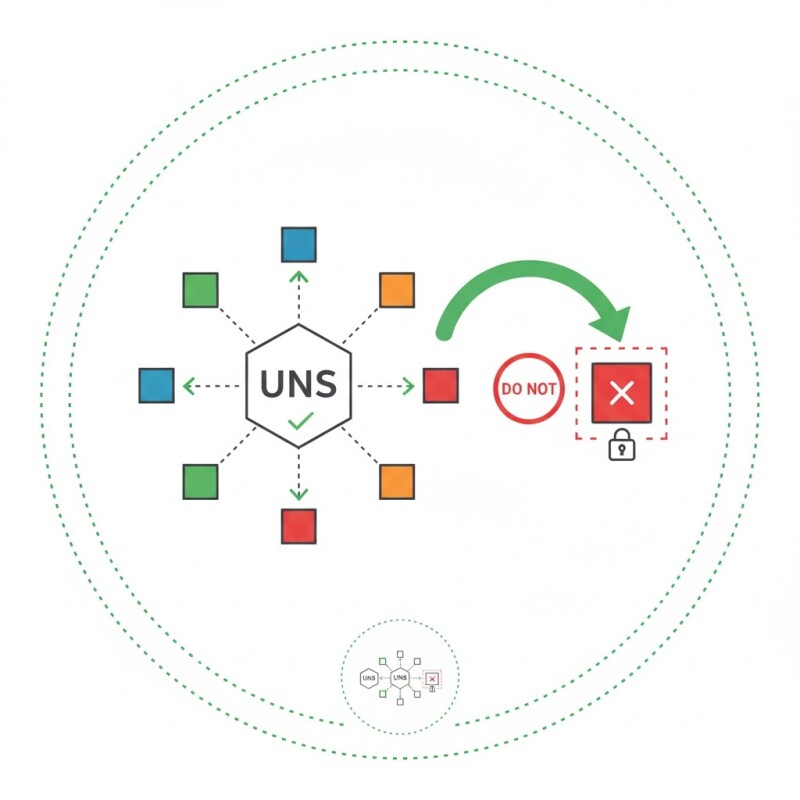
How to Avoid Creating a New Data Silo with Your UNS
The irony of many Unified Namespace (UNS) projects is that they end up creating another silo — just with better technology. Without open governance and integration discipline, a UNS can become a closed world of its own.
The Root Causes of “Silo 2.0”
- Vendor-specific brokers or schema formats that limit interoperability.
- Data published without consistent context or ownership.
- Access restricted to a few teams due to unclear governance.
Design for Openness
- Use open protocols (MQTT Sparkplug B, OPC UA PubSub) and open schemas (JSON, Avro).
- Expose read-only APIs for analytics and cloud systems.
- Maintain a data catalog that documents every topic and asset definition.
Continuous Validation
Regularly audit data flow coverage — which systems publish, which consume, and where gaps exist. A healthy UNS behaves like an ecosystem, not a repository.
Case Example: Packaging OEM
By implementing open MQTT namespaces and standard schemas, the company enabled secure data sharing between customers and service teams without breaking isolation boundaries.
Related Articles
- Designing a Plant-Wide Data Model That Scales
- Naming Conventions for UNS: Keep It Human, Keep It Hierarchical
- Data Ownership in OT: Who Owns What, and Why It Matters
Conclusion
Your UNS should connect — not isolate. By prioritizing openness, documentation, and shared governance, you ensure it remains a collaboration hub across OT, IT, and business domains.













Interested? Submit your enquiry using the form below:
Only available for registered users. Sign In to your account or register here.