



[Article]: How Automation is Changing the Role of Skilled Machinists
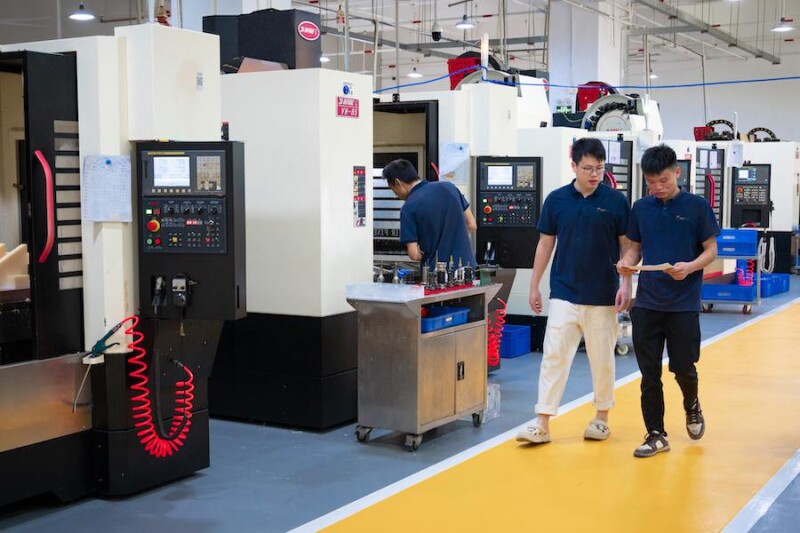
The manufacturing sector is currently undergoing a structural transformation with the rise of automation and intelligent systems. Moving away from manual control and tactile expertise, modern machining environments operate within highly integrated cyber-physical production systems. Under such a background, many statements suggest that the role of “machinist” is fading away. However, a more proper interpretation would be that the role is going through a redefining stage, not elimination. Those who understand and adapt to the shift from “operator” to “technical decision maker” will be the ones who’ll survive and add value to the role.
The Shift From Operator to Data-Driven Expertise
Highly connected, sensor-embedded modern machines are now capable of observing, monitoring, data recording, failure detection, etc., which were once the main tasks of machinists. Therefore, what modern rapid manufacturing demands from a machinist are strong data interpretation and decision-making skills.
Predictive capability, supported by human intuition, is one of the most highly valued skills modern machinists can bring to the table. This is critical for smart manufacturing, especially to reduce downtime and improve process stability. To develop strong predictive skills, machinists should step beyond the simple operational tasks and gather new knowledge in data analysis techniques (including tools such as SPC, capability indices, and predictive algorithms). Although these technicalities can be highly assisted by AI, intuition (usually known as the sixth sense of humans) is a unique human ability that AI cannot fully imitate yet.
From Repetitive Tasks to High-Level Process Programming
Automation systems have already taken over repetitive operations that require low skill levels. Robotic arms, automatic tool changers, pallet systems, and inspection units are now fully automated with high efficiency. These systems are achieving levels of precision and consistency that can never be matched manually, powered by highly advanced technologies such as 5-axis machining, hybrid manufacturing (a combination of additive and subtractive manufacturing), and closed-loop systems. Many manufacturers now rely on specialized CNC machining services to implement these advanced automated processes effectively.
Rather than viewing this as a risk or a loss for the human workforce that once performed these tasks, it should be seen as an opportunity to move up the value chain. They can now focus on high-level responsibilities such as CAM and CNC machining programming, optimizing cycle time, process planning, and design for manufacturing (DFM) techniques.
The New Requirement: Hybrid Skills in the Smart Shop Floor
To survive and excel on the modern manufacturing shop floor, machinists must develop a hybrid skill set. In addition to the technical skills mentioned above, the ability to work alongside collaborative robots (cobots) and adapt to synchronized workflows is becoming essential. This is basically a broader transformation from traditional machinists into process engineers.

One of the most underrated, traditionally rooted yet highly futuristic skills is having a solid foundation in fundamentals (such as material properties, mechanisms, and cutting dynamics). Although automation can perform analysis, detection, and decision-making to a certain extent, the ability to map complex scenarios back to first principles will always be a demanding skill. While some claims suggest this is a fading traditional capability, the reality is that it is now applied within a digitally augmented environment. It will never fade since this is the basis for making informed decisions to effectively balance productivity, quality, and cost.
In addition, the concept of the digital thread is also an increasingly important aspect of modern machining. This implies the continuous data flow from design to production and inspection. Rather than working on isolated operations, modern machinists must be able to work with these interconnected threads.
Another important aspect that comes alongside all the above skills and knowledge is the machinist’s willingness to adapt and update themselves. This is no longer a fixed role but a continuously evolving one that needs absorbing new knowledge, staying aware, and being flexible towards rapidly changing environments.
The Need for Skilled Machinists in Complex Machining Scenarios
Machinists are still a non-replaceable part in highly complex and low-volume production floors, even with the latest technology advancements. Machines still struggle with making nuanced judgments, managing unexpected situations, custom work (especially prototypes), and operation under non-ideal conditions. Therefore, the presence of a trained human eye and experience-based judgment is necessary. Also, machines cannot still fill the creativity gap brought by a skilled human. Under current advancements, machines mainly excel in repetitive, pre-programmed tasks. In such a situation, investing in automation must go hand in hand with investing in people.

There’s an emerging risk of manufacturers focusing mainly on investing in automation and giving less priority to human talent. Moving towards automation is a powerful move, but also 100% automated systems are highly fragile. A single malware attack or software failure can stop the production for days, creating unbearable losses. Upskilling the human workforce and encouraging effective human-machine collaboration is highly important to meet the full potential of smart manufacturing. That’s why many experts advocate for Hybrid Intelligence (Industry 5.0) rather than entirely replacing humans.
As a strategic recommendation for 2026, the best move is to give priority to bottleneck automation and using cobots. Two of such main bottlenecks to be addressed first are high-ROI areas and the chores that have labor shortages. Installing cobots is also a safe and smart move, since cobots build a flexible workspace under the supervision of humans.
Conclusion
In conclusion, automation is not eliminating the role of machinists in the way many people feared. It is actually elevating human expertise. Machinists are still a main part of the production system, but with clearly evolved roles. They are now mostly seen as supervisors of automated systems, interpreters of data, and decision-makers. A modern production system needs both machine intelligence and human engineering expertise to achieve its optimum capacity.














Interested? Submit your enquiry using the form below:
Only available for registered users. Sign In to your account or register here.