




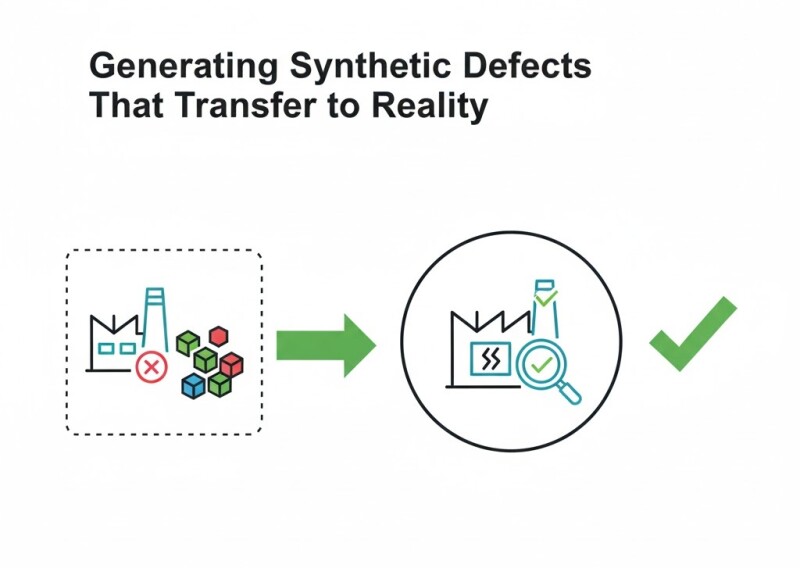
Generating Synthetic Defects That Transfer to Reality
Training vision AI systems often fails due to limited defect samples. Synthetic data — artificially generated yet photorealistic defect images — bridges this gap, providing massive, controlled datasets that accelerate inspection performance.
Why Synthetic Defects Work
Deep learning models rely on variance, not volume. Synthetic generation introduces new defect geometries, lighting conditions, and surface textures — all critical to prevent overfitting to one product batch or camera setup.
Creating Transferable Defects
- Start with CAD models: Base geometry ensures physical realism.
- Simulate optical distortions: Match the camera’s lens, exposure, and lighting angles.
- Blend synthetic with real: Mix synthetic data during fine-tuning to improve domain adaptation.
Tools of the Trade
- NVIDIA Omniverse Replicator
- Unity Perception
- Blender + Python scripting
Case Example
An electronics manufacturer generated 50,000 synthetic solder joint defects. After fine-tuning on just 500 real images, model accuracy jumped from 82% to 95% — with zero downtime on the line.
Related Articles
- Domain Randomization for Robustness: A How-To
- Validating Synthetic Pipelines: Metrics That Matter
- Licensing and IP for Synthetic Assets: Avoid Surprises
Conclusion
Synthetic defects turn data scarcity into abundance. When generated with optical and physical fidelity, they transfer to reality — unlocking consistent inspection accuracy across product variants.










Interested? Submit your enquiry using the form below:
Only available for registered users. Sign In to your account or register here.