





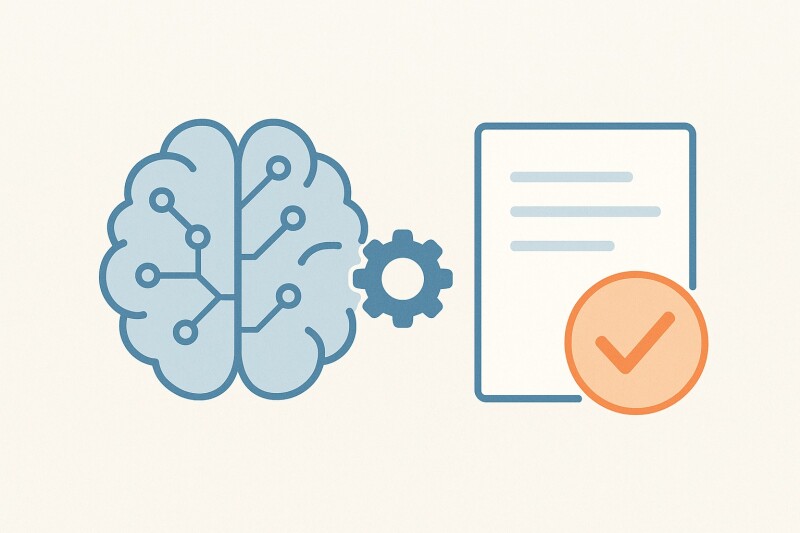
GAMP 5 and AI: Validating Models in Regulated Environments
As artificial intelligence enters GMP manufacturing, automation engineers face a new question: how do you validate AI models under GAMP 5 and 21 CFR Part 11 frameworks? Unlike static control logic, AI systems learn — which means validation must adapt, not just document.
AI Under GAMP 5
GAMP 5 categorizes systems by risk and complexity. AI-based systems fall under Category 5 – Configurable or Custom Applications, requiring comprehensive validation and change control.
Validation Challenges
- Model drift: Data or process shifts can degrade AI performance over time.
- Transparency: Models must be explainable and auditable.
- Revalidation: Retraining requires documented triggers and approval workflows.
Best Practices for AI Validation
- Define input data specifications and boundary conditions.
- Perform initial and periodic performance qualification (PQ) using reference datasets.
- Implement version control for models, weights, and hyperparameters.
- Log every retraining event and document rationale for deployment.
Case Example: Predictive Maintenance in Biotech
A biotech plant applied AI to detect centrifuge anomalies. Using GAMP 5 principles, they validated the model’s logic path, locked training datasets, and achieved audit acceptance from both FDA and EMA inspectors.
Related Articles
- CSV and 21 CFR Part 11 for Automation Engineers
- Batch Records That Pass: eBR/eDHR Design Patterns
- Deviation, CAPA, and Change Control: An Automation View
Conclusion
AI doesn’t break GAMP — it modernizes it. With disciplined validation, traceable retraining, and documented reasoning, AI becomes an approved, auditable part of regulated automation.















Interested? Submit your enquiry using the form below:
Only available for registered users. Sign In to your account or register here.