



Domain Randomization for Robustness: A How-To
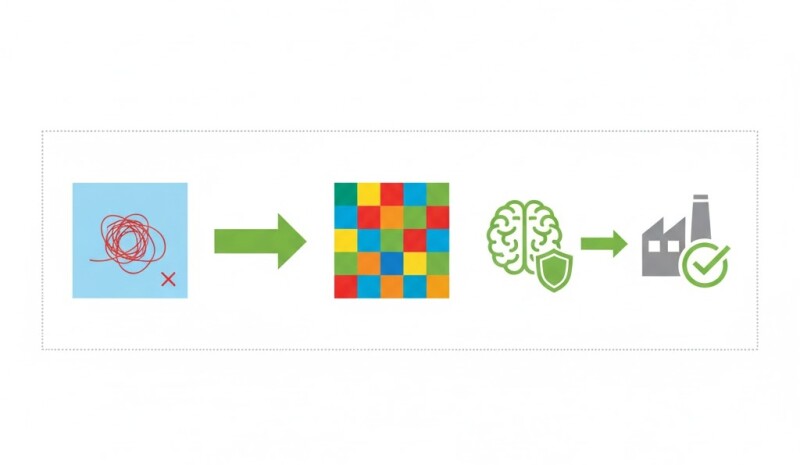
One of the biggest problems in vision AI is overfitting — models that work perfectly in the lab but fail on the shop floor. Domain randomization fixes that by intentionally adding variability to synthetic data so AI learns to generalize.
The Principle
Instead of training models to recognize a single perfect view, domain randomization teaches them to handle all possible views. Lighting, materials, noise, and camera pose are randomized during synthetic image generation.
Parameters to Randomize
- Lighting angle and color temperature
- Camera position and focal length
- Surface texture, reflectivity, and background clutter
- Sensor noise and blur
Practical Workflow
- Define scene and part geometry.
- Use random seeds to control environmental variance.
- Generate 10×–50× synthetic samples per real example.
Case Example
A metal stamping plant applied domain randomization to synthetic crack detection. The resulting AI model achieved 97% recall under varying lighting — versus 84% without randomization.
Related Articles
- Generating Synthetic Defects That Transfer to Reality
- When to Stop Collecting Real Data and Simulate
- Validating Synthetic Pipelines: Metrics That Matter
Conclusion
Domain randomization makes AI robust, not brittle. By embracing controlled chaos in synthetic generation, your model learns to thrive in the unpredictable reality of production lines.
















Interested? Submit your enquiry using the form below:
Only available for registered users. Sign In to your account or register here.