





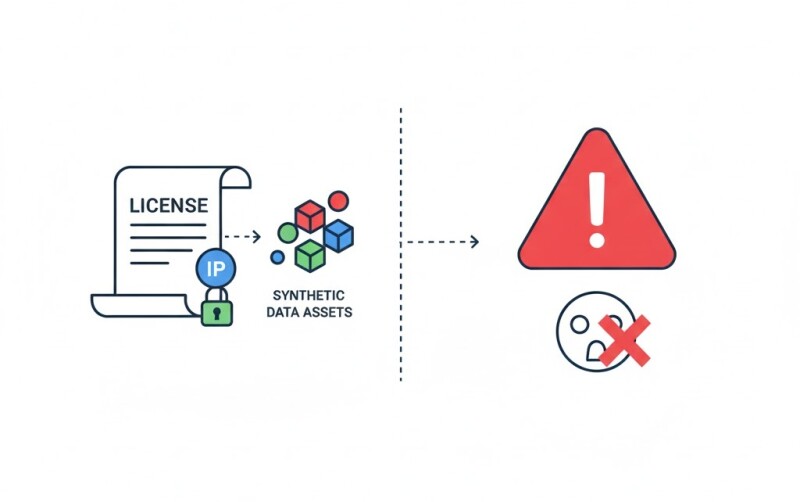
Licensing and IP for Synthetic Assets: Avoid Surprises
Unlike real photos, synthetic data carries unique intellectual property and licensing implications. Understanding asset ownership, usage rights, and software licenses prevents legal issues down the road.
Who Owns Synthetic Data?
Ownership typically depends on toolchain and input data:
- Fully original scenes: Company owns 100% of generated data.
- Licensed 3D models or textures: IP may remain with the model creator.
- Hybrid assets: Shared IP; commercial use requires explicit permission.
Licensing Considerations
- Check CC-BY or commercial clauses in texture/model sources.
- Store provenance metadata for every synthetic file.
- Use open-source tools (e.g., Blender, Omniverse) to minimize legal complexity.
Data Governance and Audit
Maintain a manifest listing:
- All input 3D assets and their license types.
- Synthetic datasets generated from each scene.
- Access control and export records for external sharing.
Case Example
A robotics OEM discovered that third-party 3D components in its dataset were non-commercial licensed. Re-rendering compliant versions avoided potential IP disputes with major clients.
Related Articles
- Generating Synthetic Defects That Transfer to Reality
- Validating Synthetic Pipelines: Metrics That Matter
- Domain Randomization for Robustness: A How-To
Conclusion
AI success depends on data integrity — and that includes legal integrity. Managing IP for synthetic datasets ensures your innovation remains yours, not borrowed trouble.















Interested? Submit your enquiry using the form below:
Only available for registered users. Sign In to your account or register here.