





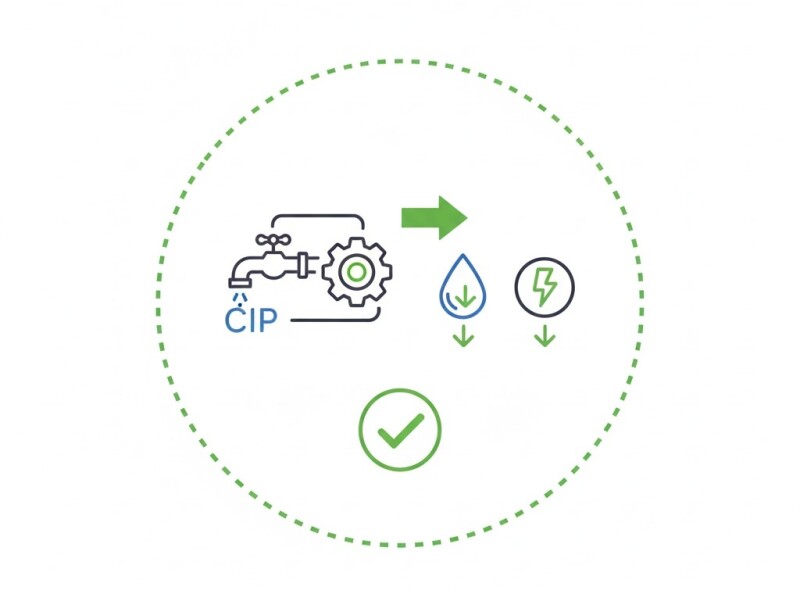
Clean-in-Place Automation: Saving Water and Energy
Clean-in-Place (CIP) systems are essential for hygiene and product safety, but they also consume large volumes of water, chemicals, and energy. Advanced automation and analytics are cutting those costs dramatically — without compromising cleanliness.
Smart CIP Principles
- Sensor-driven validation: Conductivity, turbidity, and flow sensors verify rinse quality in real time.
- Recipe optimization: Dynamic adjustment of wash times and detergent concentration based on contamination level.
- Energy recovery: Heat exchangers reuse thermal energy from rinse water.
AI-Optimized Cleaning
AI models trained on historical cleaning data predict the minimal cycle duration required to meet microbial thresholds — often reducing cycle time by 15–25%.
Case Example: Brewery Line
A European brewery integrated AI-based CIP scheduling across five lines. Annual water use dropped 18%, and cleaning validation reports were generated automatically for auditors.
Related Articles
- Allergen Control with Sensors and Software
- Flexible Packaging Lines: Robotics for Short Runs
- Digital HACCP: Turning Compliance into a Dashboard
Conclusion
Automated CIP is no longer a fixed recipe — it’s a learning process. With sensor feedback and data-driven optimization, plants save water, energy, and downtime while staying audit-ready.











Interested? Submit your enquiry using the form below:
Only available for registered users. Sign In to your account or register here.