


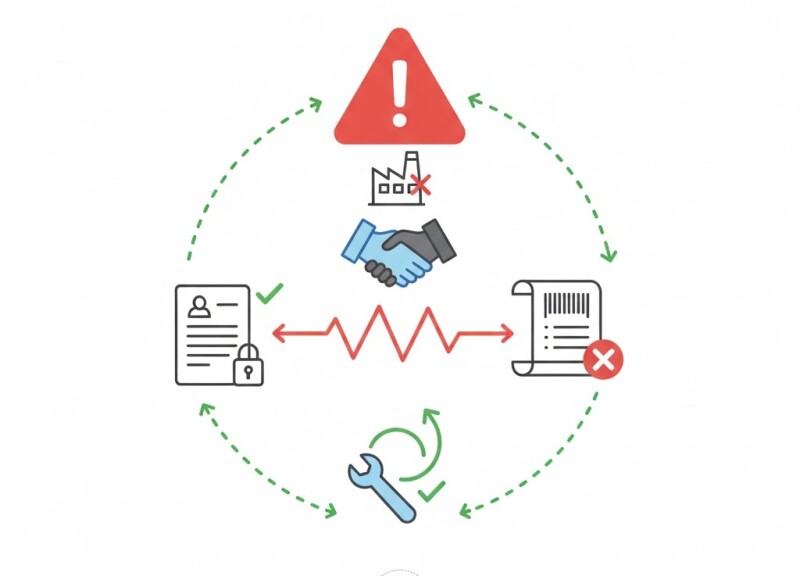
Supplier Risk in the OT World: Contracts, SBOMs, and Patching
NIS2 elevates supply-chain security from a procurement checkbox to an operational obligation. In OT, where PLCs, drives, HMIs, and gateways often run for decades, supplier risk translates directly into production risk. This article shows how to operationalize supplier assurance with contract clauses, SBOMs, coordinated disclosure, and pragmatic patching windows that fit factory reality.
Why Supplier Risk Is Different in OT
- Long lifecycles: Devices stay in service 10–20 years; vendors and product lines change.
- Change-aversion: Patching can stop production; firmware updates require validation.
- Protocol exposure: Many devices still speak legacy, unauthenticated protocols; segmentation is vital.
Contractual Controls That Actually Work
Translate policy into enforceable terms. Add these minimums to frame agreements and purchase orders:
- Vulnerability disclosure & timelines: Vendor commits to coordinated disclosure and security advisories with CVSS scoring; critical fixes provided within defined SLAs (e.g., 15/30/90 days).
- SBOM delivery: Provide a signed SBOM (e.g., SPDX/CycloneDX) at purchase and for each firmware release; include third-party components and licenses.
- Firmware support window: Guarantee security maintenance for at least 7–10 years or offer a paid LTS track.
- Secure update mechanism: Signed firmware, rollback protection, and offline update packages for air-gapped sites.
- Audit rights: Right to request evidence of SDL (secure development lifecycle), pentest summaries, and incident postmortems affecting shipped products.
SBOMs: From PDF to Practice
SBOMs become actionable when integrated with your asset inventory and vulnerability scanning:
- Ingest: Store vendor SBOMs centrally; map components to known CVEs.
- Correlate: Link SBOM components to deployed device models and firmware versions.
- Prioritize: Rank exposure by criticality (production impact), network zone, and exploit maturity.
- Plan windows: Align remediation to planned stops (weekend, monthly, major shutdown).
Patching That Respects Production
Adopt a tiered approach rather than “patch everything now”:
- Tier 1 (Internet-exposed/remote access): Immediate mitigation (disable service, ACLs, VPN hardening), hotfix asap.
- Tier 2 (Critical cell controllers): Compensating controls (firewall, DPI, read-only accounts) until the next validated maintenance window.
- Tier 3 (Isolated, low-risk): Patch during quarterly shutdowns; verify via test bench or digital twin before rollout.
Vendor Scorecard for NIS2
| Control | Evidence | Score (0–2) |
|---|---|---|
| SBOM & advisories | SPDX/CycloneDX + mailing list | |
| Secure updates | Signed firmware, rollback test | |
| Support window | LTS policy in contract | |
| SDL & testing | Process docs, pentest summary | |
| Incident comms | SLA, CSIRT contacts |
Use the score to gate new vendors and to prioritize remediation with existing ones.
Case Example: Packaging OEM Fleet
After standardizing contracts and SBOM intake, a packaging OEM discovered OpenSSL vulnerabilities across three HMI models. By correlating SBOM → firmware → installed base, they remediated 78% of exposure via configuration and network policy while scheduling firmware updates for the remaining 22% during a planned outage—zero unplanned downtime.
Related Articles
- NIS2 for Plant Managers: What You Must Do Before Your Next Audit
- Incident Reporting in OT: Playbooks That Meet NIS2 Deadlines
- From Policy to PLC: Mapping NIS2 Controls to the Factory
Conclusion
Supplier risk is manageable when contracts, SBOMs, and patching windows are engineered for OT constraints. Tie supplier obligations to verifiable evidence and couple remediation with operational planning—meeting NIS2 without sacrificing uptime.











Interested? Submit your enquiry using the form below:
Only available for registered users. Sign In to your account or register here.