





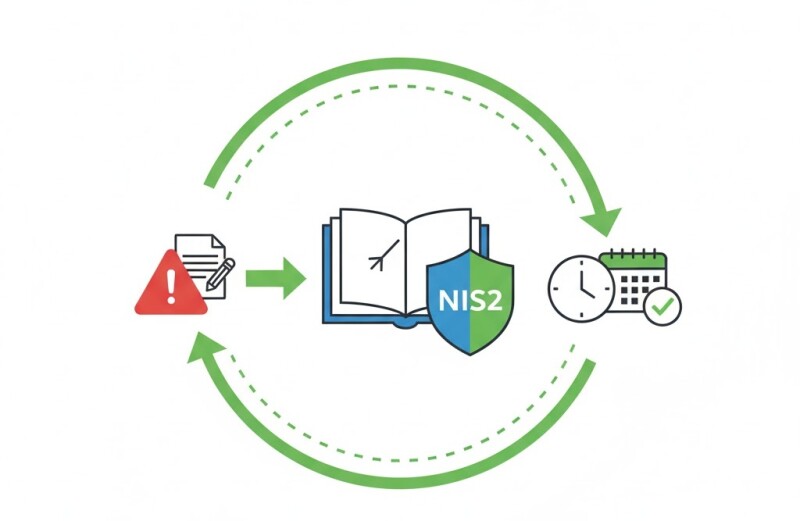
Incident Reporting in OT: Playbooks That Meet NIS2 Deadlines
Under the NIS2 Directive, incidents must be reported to national authorities within 24 hours of detection. For IT teams, this is challenging — for OT environments, it’s even harder. Systems can’t be taken offline for forensics, and visibility is often limited.
The Three-Step Reporting Model
- Initial Notification (24h): Summary of what’s known — affected systems, estimated impact, containment actions.
- Intermediate Report (72h): Updates on root cause, mitigation progress, and recovery status.
- Final Report (30 days): Full technical analysis and lessons learned.
OT Challenges
- Legacy PLCs lack logging or encryption.
- Limited intrusion detection on Layer 2 protocols (Modbus, Profinet).
- Difficulty distinguishing between malfunction and attack.
Building the OT Playbook
Effective playbooks define who, what, and when. Each factory should have:
- A named OT incident coordinator.
- Predefined contact lists for national CSIRTs.
- Automated alert forwarding from OT monitoring tools.
- Templates for 24h and 72h reports.
Example: Food Processing Plant
After a ransomware attack on a packaging line HMI, a food manufacturer met NIS2 deadlines by using a hybrid IT/OT SOC. Incident logs were correlated from firewalls and historian systems within hours.
Related Articles
- NIS2 for Plant Managers: What You Must Do Before Your Next Audit
- From Policy to PLC: Mapping NIS2 Controls to the Factory
- Supplier Risk in the OT World: Contracts, SBOMs, and Patching
Conclusion
NIS2 compliance isn’t only about technology — it’s about readiness. An OT incident playbook ensures your factory can respond fast, contain impact, and communicate clearly under pressure.
















Interested? Submit your enquiry using the form below:
Only available for registered users. Sign In to your account or register here.