





Run Rules: What to Alert On (and What to Ignore)
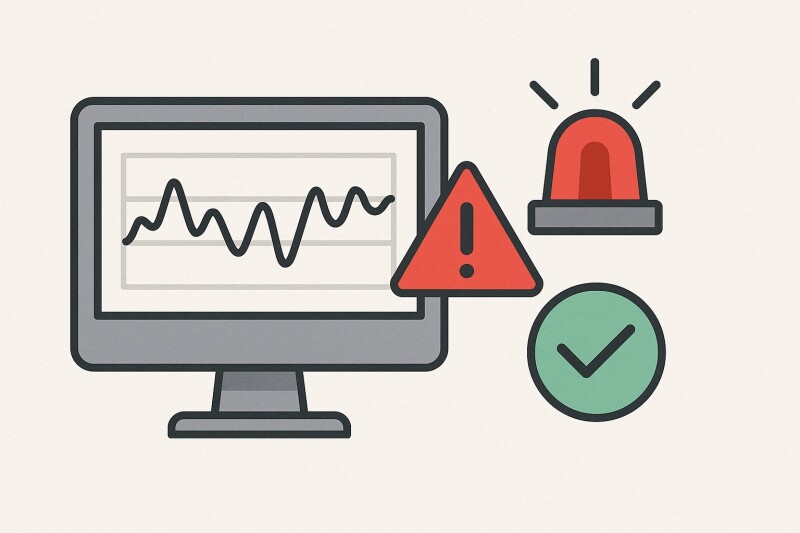
Not all alarms are created equal. A line that alerts too often trains operators to ignore signals — the “cry wolf” effect of automation. Effective run rules distinguish between actionable deviations and harmless noise, improving both uptime and focus.
What Are Run Rules?
Run rules define the logic that determines when the system should alert a deviation in OEE, process parameters, or performance. They’re the bridge between analytics and action.
Symptoms of Bad Alerting
- More than 20% of alerts are repeated within 5 minutes.
- Operators disable alerts to maintain productivity.
- “Alert fatigue” during normal changeovers or product variation.
How to Design Smart Run Rules
- Correlate alerts with production context — product type, shift, mode.
- Use deadbands and time hysteresis to suppress noise.
- Escalate intelligently: if the same alert reappears X times, raise severity.
- Review alert logs weekly — prune anything that adds no operational value.
Case Example: Electronics Line
After tuning run rules, a plant cut daily alerts from 600 to 80, while improving reaction time to real faults by 40%. Operators trusted the system again — and OEE stabilized.
Related Articles
- OEE That Drives Action: From Trend to Root Cause
- Loss Trees That Operators Actually Use
- Tying OEE to Profit: A CFO-Friendly Guide
Conclusion
Smart alerting isn’t about adding alarms — it’s about removing distractions. With well-designed run rules, operators respond faster, downtime drops, and analytics regain credibility.













Interested? Submit your enquiry using the form below:
Only available for registered users. Sign In to your account or register here.