





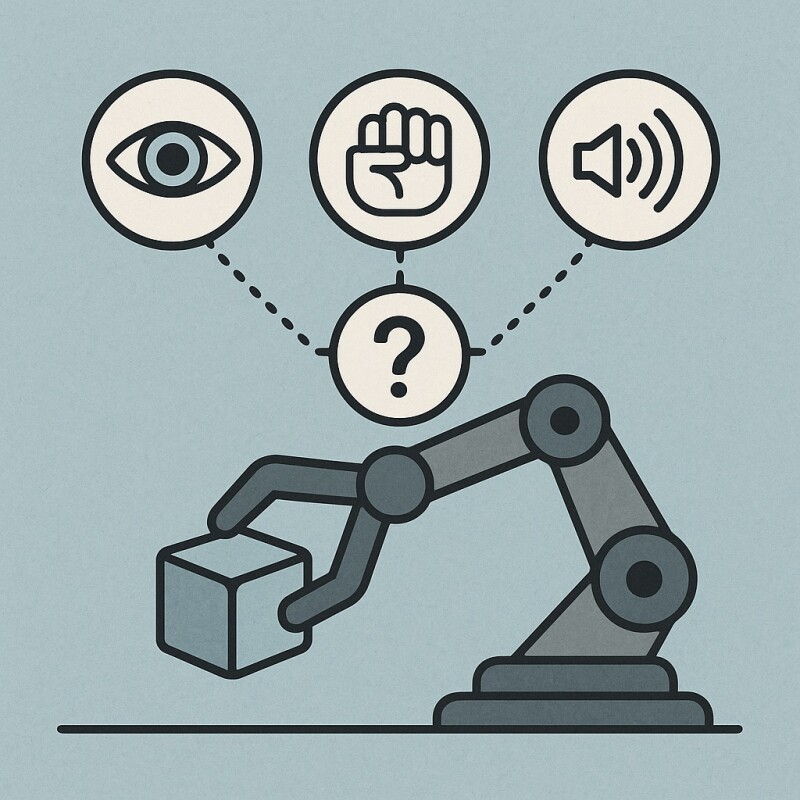
Multimodal QA: Fusing Vision, Force, and Sound
Factories generate multiple streams of sensory data — visual, acoustic, and tactile. Instead of analyzing them separately, multimodal AI systems combine all signals into unified quality judgments for higher reliability.
Fusion Framework
- Feature-level fusion: Merge features from different sensors before classification.
- Decision-level fusion: Combine outputs from independent models.
- Temporal fusion: Synchronize data streams over the same production cycle.
Applications
- Press-fit assembly validation using sound + torque signals.
- Surface defect detection combining 2D vision with vibration feedback.
- Battery welding inspection merging thermal and acoustic data.
Case Example
An EV battery plant deployed multimodal AI across 12 stations. Combined sensors improved defect detection accuracy by 8% compared to vision-only inspection.
Related Articles
- Acoustic and Vibration AI for Process Quality
- Generative AI for Test Coverage: Where It Fits
- Self-Calibration with AI: Reducing Manual Tweaks
Conclusion
Multimodal QA creates a richer understanding of product quality. By combining sight, sound, and touch, AI replicates the intuition of experienced operators — at scale and with data traceability.















Interested? Submit your enquiry using the form below:
Only available for registered users. Sign In to your account or register here.