





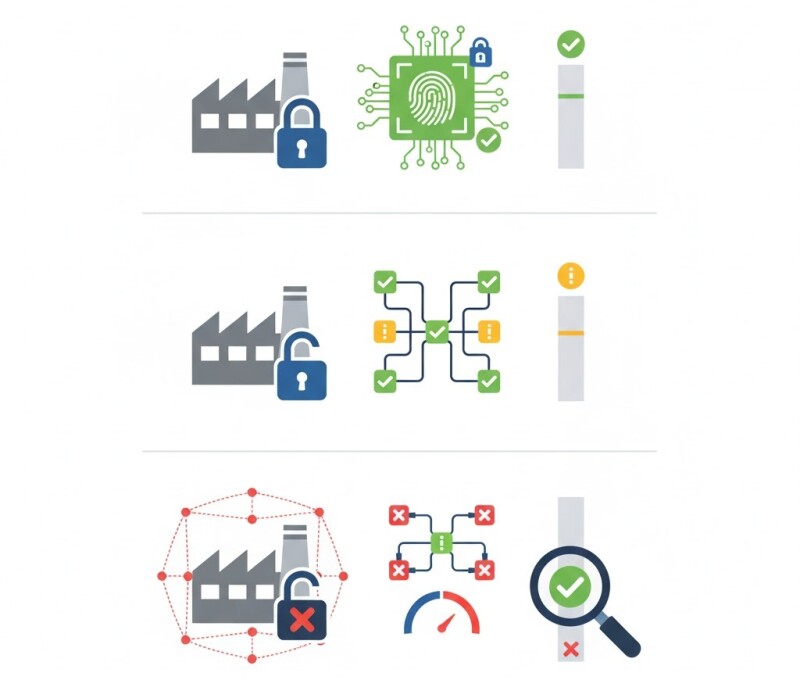
Measuring Zero Trust Maturity in Factories
Zero Trust isn’t a product — it’s a journey. Measuring progress helps OT leaders prioritize what to fix next. A maturity model turns abstract goals into tangible milestones across identity, segmentation, and visibility.
The 5 Maturity Levels
- Level 1 – Reactive: Flat network, shared logins, and no asset visibility.
- Level 2 – Controlled: VLAN segmentation, limited remote access, manual user provisioning.
- Level 3 – Managed: Role-based access, MFA, centralized logging.
- Level 4 – Adaptive: Automated certificate rotation, per-session policy enforcement.
- Level 5 – Predictive: AI-assisted anomaly detection and risk-based access decisions.
Metrics That Matter
- Percentage of assets in defined security zones.
- Average credential rotation frequency (days).
- Number of remote sessions with just-in-time approval.
- Mean Time to Revoke (MTR) access after offboarding.
Implementing a Maturity Assessment
Use frameworks like NIST SP 800-207 and IEC 62443-3-2 as benchmarks. Score each domain quarterly and align improvement plans with operational KPIs (uptime, downtime cost, MTTR).
Example
A Tier-1 automotive supplier used this model to benchmark Zero Trust progress. Within one year, it moved from Level 2 to Level 4 maturity by automating identity management and network policy enforcement.
Related Articles
- Zero Trust in OT: Micro-Segmentation That Engineers Can Maintain
- Identities for Machines: Certificates, TPMs, and Rotate at Scale
- Remote Work in OT: Secure Access without VPN Sprawl
Conclusion
Zero Trust maturity is measurable. With clear metrics and benchmarks, factories can evolve security step by step — without halting production or overcomplicating operations.














Interested? Submit your enquiry using the form below:
Only available for registered users. Sign In to your account or register here.