



Mapping and Wayfinding: Barcodes, Beacons, and SLAM
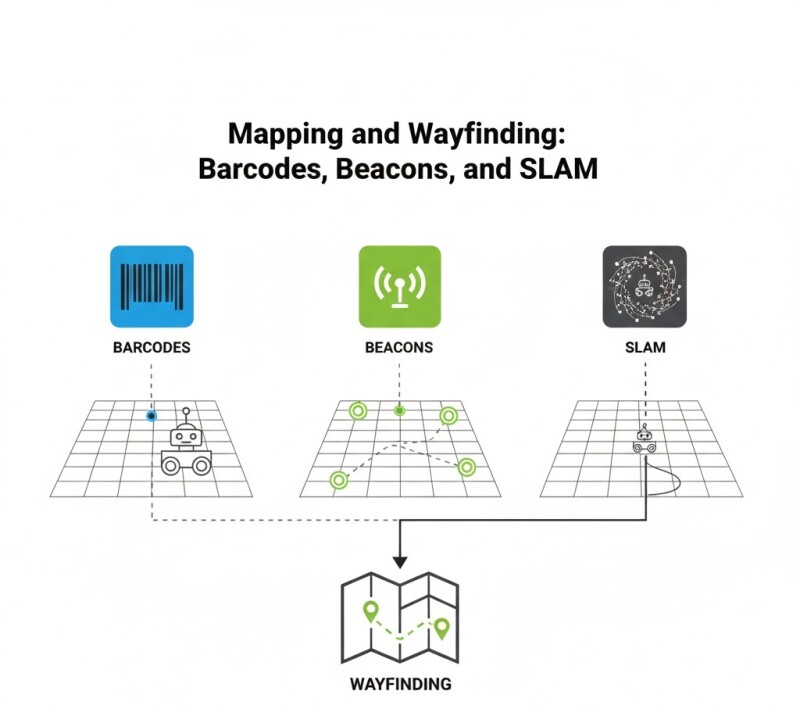
Navigation is the brain of any mobile robot. The difference between AGV, AMR, and autonomous forklifts often comes down to how they perceive and map the factory floor. From barcode routes to AI-based SLAM, each method carries trade-offs in precision, cost, and scalability.
1. Barcode and Reflector Guidance
The classic AGV method — simple, robust, and cost-effective. Routes are defined by optical or reflective markers. Easy to install but inflexible for layout changes.
2. Beacon and QR Localization
Intermediate systems use UWB beacons or ceiling-mounted QR tags. They allow dynamic rerouting and improve positional accuracy to ±20 mm, ideal for shared human zones.
3. SLAM (Simultaneous Localization and Mapping)
Modern AMRs and forklifts rely on LiDAR and AI-driven SLAM. This allows navigation in unstructured spaces with real-time obstacle avoidance and map updates — the backbone of Industry 4.0 mobility.
4. Hybrid Navigation
Combining fixed markers with SLAM ensures reliability even under poor visibility or reflective surfaces. Hybrid systems are becoming standard in 2025 deployments.
Example
A beverage plant upgraded AGVs with LiDAR-based SLAM overlays. Route flexibility increased 4×, and manual layout reprogramming dropped to zero.
Related Articles
- AGV, AMR, or Forklift? A 2025 Buyer’s Decision Tree
- Safety and Standards for Mobile Material Handling
- Total Cost of Ownership: Batteries, Tires, and Service
Conclusion
SLAM is redefining industrial navigation. With hybrid mapping and dynamic updates, AMRs and AGVs can finally coexist seamlessly on the same shop floor.












Interested? Submit your enquiry using the form below:
Only available for registered users. Sign In to your account or register here.