





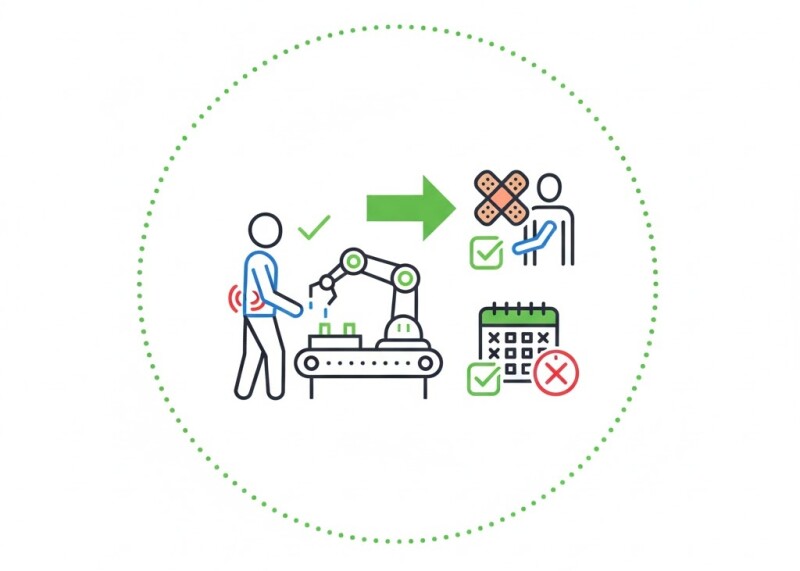
Ergonomics Wins: How Cobots Reduce Injuries and Absence
Repetitive strain and awkward postures cause thousands of lost workdays annually. Cobots are now part of the solution, taking over high-strain, low-skill motions — from lifting and twisting to screwdriving and glue application.
Typical Ergonomic Improvements
- Posture relief: Cobots handle overhead or under-bench operations.
- Load reduction: Mechanical assistance for weights above 5 kg.
- Cycle distribution: Shared workflows reduce peak fatigue and microtrauma.
Quantified Benefits
In one Tier-1 supplier, shoulder and wrist injuries dropped 42% within six months of HRC adoption. Absenteeism declined by 15% across assembly lines.
Key Ergonomic Design Practices
- Apply ISO 11228 (manual handling) and ISO/TS 15066 for contact limits.
- Keep operator focus areas below shoulder height.
- Validate workstation reach zones digitally before deployment.
Related Articles
- 10 Real HRC Applications: Assembly, Screwdriving, and Testing
- Payback Under 12 Months: What These HRC Projects Did Right
- Safety Lessons Learned: Near-Misses That Changed Designs
Conclusion
Well-designed collaboration improves both health and productivity. The future of ergonomics isn’t just training — it’s shared automation.











Interested? Submit your enquiry using the form below:
Only available for registered users. Sign In to your account or register here.