





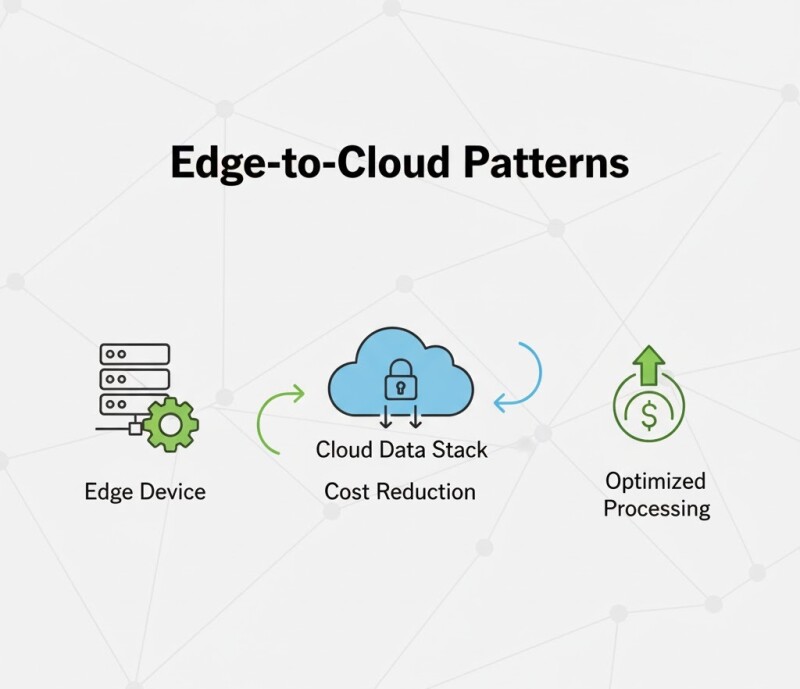
Edge-to-Cloud Patterns That Keep Costs Down
Cloud is powerful — but expensive when misused. In IIoT deployments, the smartest architectures process data locally and send only what’s needed. The result: lower bandwidth costs, faster response, and leaner infrastructure.
1. Filter and Aggregate at the Edge
Process raw sensor data close to the source. Only forward aggregated KPIs or anomaly flags upstream. Use local databases or MQTT edge brokers for temporary caching during network loss.
2. Use Tiered Storage
- Edge: Real-time buffer (minutes to hours).
- Fog Layer: Plant-wide aggregation (days).
- Cloud: Long-term analytics (weeks to years).
3. Optimize Publish Rates
Dynamic throttling — publish faster during events, slower during steady-state. Reduces message count by 70% in many IIoT pilots.
4. Example
An energy-intensive plant deployed hybrid analytics: 80% of vibration data analyzed on the edge, only 20% streamed to the cloud. Monthly cloud bill dropped 43% while keeping predictive accuracy unchanged.
Related Articles
- Choosing an IIoT Platform in 2025: Must-Have Features
- Event-Driven Architectures in OT: MQTT, Kafka, and Pub/Sub
- Alert Fatigue in IIoT: Designing for Signal over Noise
Conclusion
Cloud should complement, not replace, edge intelligence. Filter, aggregate, and prioritize locally — then send only data that matters to business outcomes.















Interested? Submit your enquiry using the form below:
Only available for registered users. Sign In to your account or register here.