





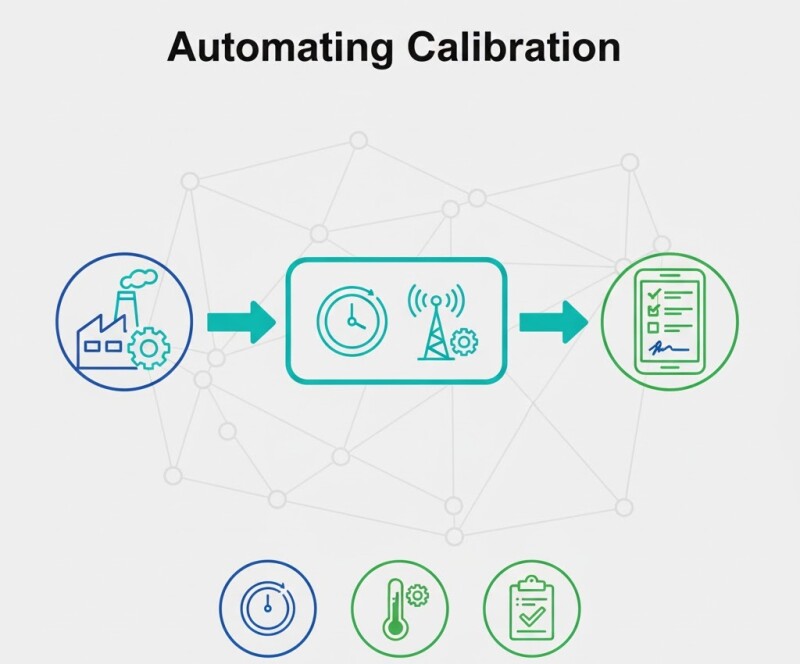
Automating Calibration: Schedules, Sensors, and Sign-Offs
Manual calibration management is slow, error-prone, and paper-heavy. Today, automated calibration systems close the loop between scheduling, sensor validation, and electronic sign-off — ensuring compliance without disrupting production.
1. Digital Calibration Schedules
Automated scheduling systems track instrument drift and trigger calibration jobs based on runtime, not just calendar days. Integration with MES or CMMS prevents overdue calibrations.
2. Smart Sensors with Self-Verification
- Embedded reference elements for automatic zero-check.
- Drift reporting directly to the historian via OPC UA or MQTT.
- Automatic certificate generation with traceable timestamping.
3. Electronic Sign-Off and Audit Trails
Replacing handwritten forms with 21 CFR Part 11-compliant e-signatures ensures authenticity. The system logs who approved, when, and under which parameters.
Example
A pharmaceutical plant reduced calibration cycle time by 40% using automated scheduling and digital certificates. Audit prep dropped from two days to two hours.
Related Articles
- SPC Meets Metrology: Close the Loop on Quality
- Traceability in Measurement: Standards and Records
- Vision-Based Metrology on the Line: Limits and Wins
Conclusion
Calibration automation blends quality with efficiency. From smart sensors to digital sign-offs, it guarantees traceable confidence with minimal downtime.













Interested? Submit your enquiry using the form below:
Only available for registered users. Sign In to your account or register here.