


Audit Trails for AI Copilots: Proving Who Saw What
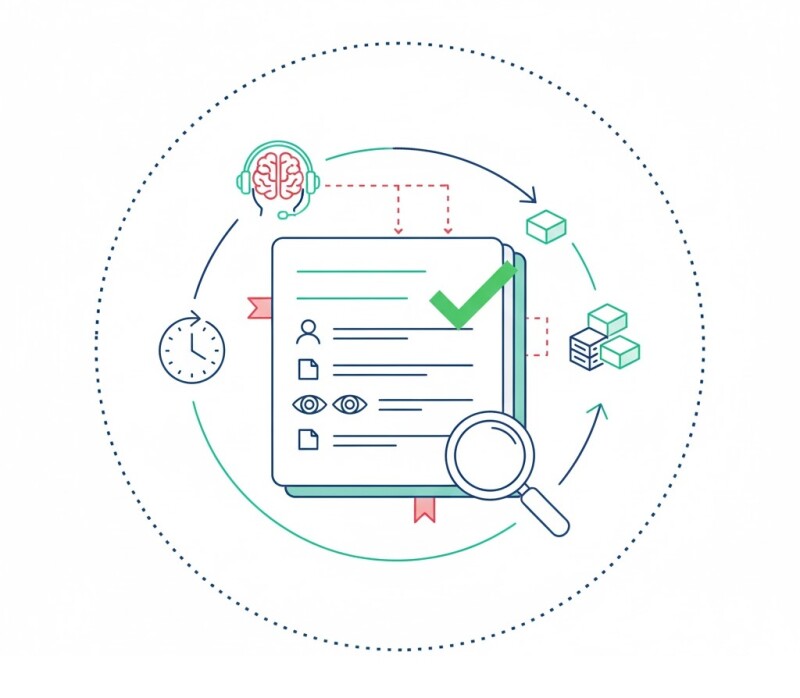
As AI copilots enter regulated and safety-critical environments, traceability and accountability become essential. Maintenance teams must prove not only what actions were taken, but which AI suggestions influenced those actions.
Why Auditability Matters
In sectors like automotive, pharma, and energy, every maintenance decision can affect compliance. When AI copilots assist in fault diagnosis or configuration, their interactions must be logged, timestamped, and attributable.
Core Audit Trail Requirements
- User identification: Authentication via badge or SSO.
- Prompt and response capture: Store all LLM exchanges for traceability.
- Linked actions: Correlate AI output with resulting CMMS or SCADA actions.
Implementation Options
- Use on-prem logging middleware between copilot and data layer.
- Sign logs cryptographically to prevent tampering.
- Retain summaries for long-term compliance (e.g., ISO 9001 or 21 CFR Part 11).
Case Example
A chemical manufacturer deployed a copilot with built-in audit trail capture. During audits, every AI suggestion was traceable to a technician and timestamp — satisfying internal QA and legal requirements.
Related Articles
- RAG for OT: Building a Safe Knowledge Base for Maintenance
- Voice Interfaces in Noisy Plants: What Actually Works
- Offline Copilots at the Edge: No Internet, No Problem
Conclusion
AI copilots must not be “black boxes.” Transparent, immutable audit trails turn AI assistance into a trusted partner in regulated operations.















Interested? Submit your enquiry using the form below:
Only available for registered users. Sign In to your account or register here.