





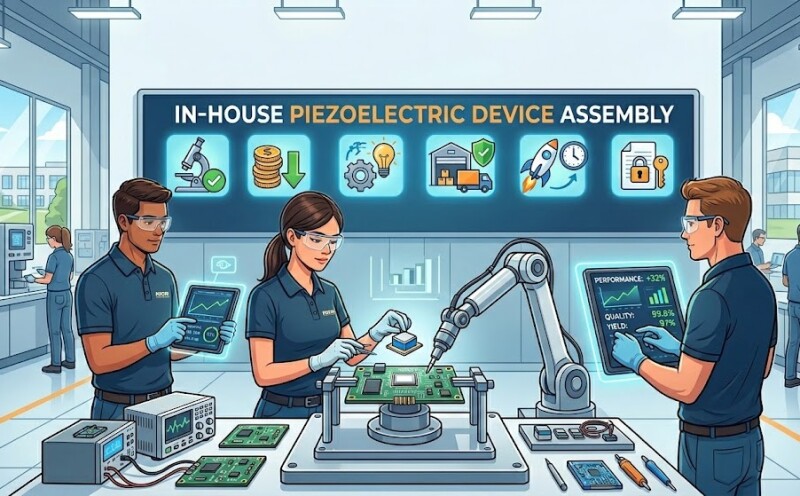
[Article]: Why Companies Are Moving to In-House Piezoelectric Device Assembly
Piezoelectric device assembly is experiencing growing demand in medical manufacturing, aerospace and semiconductor production as companies seek highly precise and reliable electronic components. Manufacturers move toward in-house assembly operations to gain stronger control over product quality and development timelines, especially as advanced applications require tighter tolerances and faster engineering collaboration.
Many engineering teams also view internal production as a way to improve communication between design and manufacturing departments.
How In-House Piezoelectric Device Assembly Works
Manufacturers carefully select piezo ceramics and substrates based on electrical performance and application requirements to ensure consistent device reliability. Precision bonding and wiring processes are also critical because even minor alignment inconsistencies can affect sensitivity and frequency response.
Many piezoelectric manufacturers work with experienced materials providers. For example, APC International develops proprietary piezo materials and offers application engineering support for specialized industrial and medical applications. Assemblies often include encapsulation and protective housings that shield piezo components from moisture, dust and other environmental conditions that could compromise long-term durability.
Why Companies Previously Relied on Outsourced Assembly
Many manufacturers previously outsourced production because specialized equipment and precision testing systems required significant up-front investment. External suppliers also provided access to established manufacturing infrastructure and technical expertise, which helped smaller companies scale production more quickly during early growth stages.
As demand for healthcare and defense technologies rises, the market for piezoelectric devices is estimated to reach $82.4 billion by 2035. This pushes more companies to reevaluate long-term piezoelectric device assembly strategies and manufacturing control. Outsourcing also reduced operational pressure during product development by allowing engineering teams to focus more heavily on design and testing.
The Benefits of In-House Piezoelectric Device Assembly
Manufacturers view in-house production as a strategic advantage rather than a way to reduce outsourcing costs. Greater demand for precision and stronger supply chain control accelerates the shift toward internal piezoelectric manufacturing operations.
Greater Quality and Process Control
In-house manufacturing gives companies better oversight of production consistency and defect prevention throughout every stage of assembly and testing. Internal teams can also troubleshoot problems more quickly and make immediate production adjustments without waiting for third-party suppliers.
Many manufacturers strengthen these quality control efforts by working with experienced piezoelectric partners like APC International. It manufactures piezoelectric components to “tight tolerances” and follows ISO 9001:2015 standards to maintain consistent product quality and performance.
These quality-focused processes improve reliability for precision-critical applications used in various industries. Stronger internal quality control also lets manufacturers reduce material waste and costly component failures.
Faster Product Development and Innovation
In-house manufacturing encourages closer collaboration between engineering and production teams, which helps companies respond more quickly to design modifications and technical challenges. Faster prototyping and testing cycles also allow manufacturers to refine products with fewer delays during development.
Many companies view internal piezoelectric device assembly as a strategic advantage because in-sourcing gives businesses greater control over the execution of in-house tasks since the company manages employees and production priorities. Reduced dependence on third-party communication and external logistics shortens production timelines and improves operational efficiency.
Improved Supply Chain Stability
Manufacturers that move production in-house reduce dependence on overseas suppliers and external manufacturing schedules, which improves operational stability during periods of uncertainty. Many companies also prefer working with domestic partners such as APC International, which highlights U.S.-based manufacturing capabilities as an advantage for customers seeking more dependable supply chains.
Internal production creates better flexibility during component shortages and sudden demand fluctuations that could otherwise delay manufacturing timelines. Greater control over scheduling and inventory management also improves production predictability and long-term planning efficiency.
Better Intellectual Property Protection
In-house manufacturing reduces the risk of exposing proprietary designs and sensitive production data to outside vendors. Many companies also recognize that outsourcing presents a considerable risk of theft or hacking, along with ongoing challenges related to protecting confidential business and customer information.
As a result, manufacturers treat internal piezoelectric device assembly as an important safeguard for protecting intellectual property tied to custom sensors and specialized high-performance technologies. Stronger internal security controls also provide greater protection for aerospace and medical applications that require strict confidentiality and precision engineering standards.
Greater Customization and Long-Term Cost Efficiency
In-house production makes it easier for manufacturers to adapt piezoelectric components for application-specific performance requirements and specialized engineering demands. Internal operations also provide better support for low-volume, high-precision manufacturing projects that often require faster design adjustments and tighter process control.
Although companies may face higher up-front investments in equipment and skilled labor, many achieve lower long-term outsourcing and supply chain management costs over time. Greater production flexibility also helps manufacturers respond more quickly to customer requests and emerging technologies. Many engineering teams view internal manufacturing as a long-term investment that improves scalability and competitive differentiation.
Challenges of Bringing Piezoelectric Assembly In-House
Companies that bring production in-house often face high equipment and testing infrastructure costs before operations become fully efficient. Manufacturers also need highly skilled engineers and materials specialists who understand the complexities of precision piezoelectric manufacturing processes.
Many organizations discover that piezoelectric device assembly involves collaboration costs, ranging from coordination issues to free riding between departments and production teams.
These challenges create a counter-current of negative synergy that companies must measure alongside the operational benefits when making long-term manufacturing decisions. Complex tolerances and strict regulatory compliance requirements further increase the difficulty of maintaining consistent quality in highly regulated industries such as defense and medical manufacturing.
FAQs on In-House Piezoelectric Device Assembly
Manufacturers and engineers often have additional questions about the long-term operational impact of bringing piezoelectric production in-house. The following FAQs address common concerns related to implementation timelines and production scalability.
How long does it take to transition piezoelectric manufacturing in-house?
Timelines vary depending on facility readiness and equipment installation requirements. Companies can spend months to years developing fully optimized internal production operations.
Can small manufacturers benefit from in-house piezoelectric device assembly?
Smaller manufacturers can benefit when they focus on specialized or high-precision applications that require tighter engineering control. Strategic partnerships with experienced piezoelectric material suppliers can also prevent implementation challenges.
How does automation improve piezoelectric device assembly?
Automation improves alignment accuracy and inspection speed during manufacturing. Advanced automated systems also reduce human error and support more scalable, high-precision production workflows.
Why In-House Assembly Is Becoming a Competitive Advantage
In-house piezoelectric device assembly, such as that offered by APC International, gives manufacturers stronger quality control and greater flexibility for customized applications. Internal production also helps engineering teams improve collaboration and maintain tighter oversight of precision manufacturing processes.
Manufacturers and engineers should evaluate whether bringing assembly in-house aligns with their long-term operational goals and performance requirements.















Interested? Submit your enquiry using the form below:
Only available for registered users. Sign In to your account or register here.