





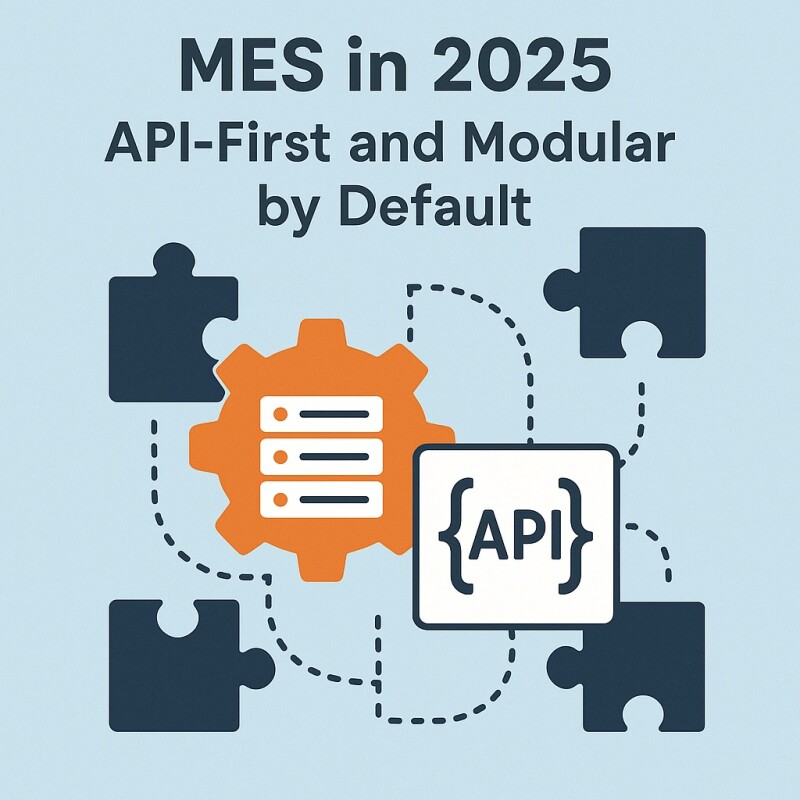
MES in 2025: API-First and Modular by Default
The Manufacturing Execution System (MES) landscape is evolving fast. By 2025, the leading systems are not monolithic anymore — they’re API-first, modular, and composable. This shift enables manufacturers to adopt MES capabilities incrementally while maintaining interoperability across IT and OT layers.
What “API-First” Really Means
In modern MES architecture, every module — from scheduling to genealogy — exposes REST or OPC UA interfaces. This allows integration with ERP, quality, and analytics platforms without proprietary middleware.
Why Modular Matters
- Faster deployment: Start small, scale later.
- Lower risk: Replace or update modules independently.
- Vendor flexibility: Mix-and-match best-of-breed components.
Core Functions to Keep Local
Batch control, traceability, and equipment integration often remain on-prem for latency and reliability reasons, while dashboards, reporting, and AI modules move to the cloud.
Case Example: Automotive Supplier
A Tier-1 manufacturer adopted an API-first MES built around microservices. The modular rollout allowed plant-by-plant adoption, cutting integration time from 12 months to 3.
Related Articles
- Build vs Buy: How to Decide Your Next MES
- Integrating MES with ERP and LIMS: Patterns That Don’t Break
- KPIs to Hold Your MES Vendor Accountable
Conclusion
The MES of 2025 is no longer a black box. It’s an open, API-driven platform that adapts to business needs, not the other way around. Manufacturers who design around modularity will outpace those locked in to legacy stacks.













Interested? Submit your enquiry using the form below:
Only available for registered users. Sign In to your account or register here.