





IEC 61131-3 Patterns for Maintainable Code
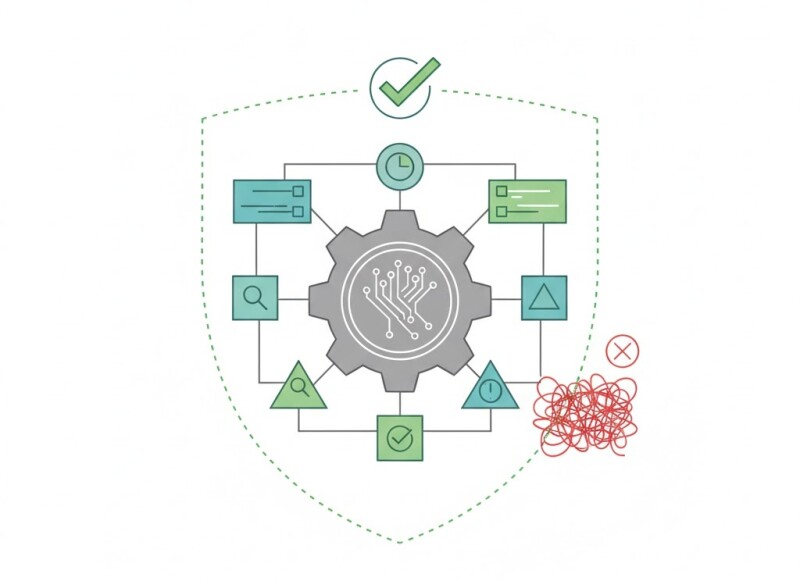
Maintainable PLC code isn’t about clever syntax — it’s about structure. The IEC 61131-3 standard defines a framework for consistent, modular logic that teams can scale, review, and validate with confidence.
Key Design Patterns
- Encapsulation: Group related variables and logic into reusable Function Blocks (FBs).
- Separation of concerns: Keep process logic apart from hardware I/O mapping.
- State machine pattern: Ideal for sequential operations and error handling.
Naming and Documentation
- Prefix variables by scope (e.g., “fbPump.StatusRunning”).
- Use consistent units and comments — tools like PLCopen XML can auto-document logic.
- Version control every FB revision to trace changes over time.
Code Review Checklist
- Readable comments and input/output descriptions.
- No hidden constants or magic numbers.
- Independent test of each Function Block before deployment.
Case Example
A beverage producer standardized IEC 61131-3 templates for all integrators. Maintenance time per update fell 40%, and new project ramp-up was two weeks faster.
Related Articles
- From Ladder to Structured Text: When (and How) to Switch
- Version Control for PLC Projects: Git Without the Pain
- Unit Testing for PLC Logic: Yes, It’s Possible
Conclusion
Good PLC code is built to last. Following IEC 61131-3 patterns turns automation projects from one-off programs into maintainable software systems.













Interested? Submit your enquiry using the form below:
Only available for registered users. Sign In to your account or register here.