





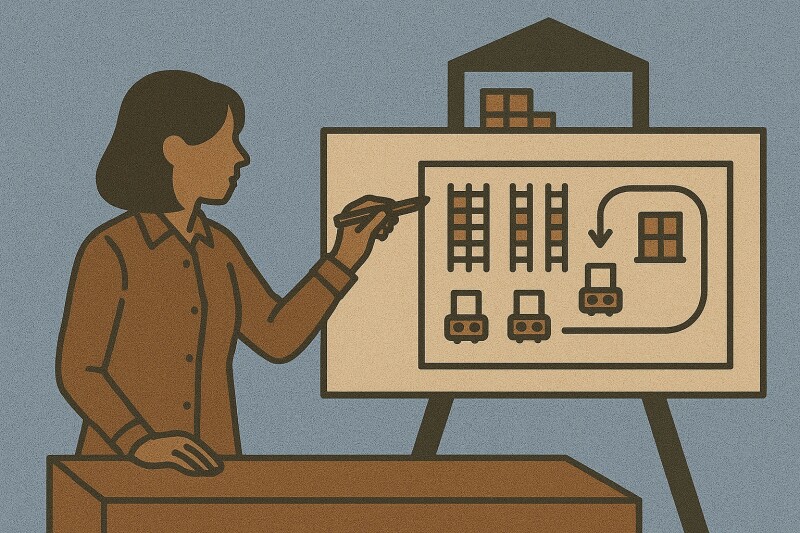
Designing a Micro-Fulfillment Center in 90 Days
Retailers and logistics providers are racing to deploy micro-fulfillment centers (MFCs) near urban hubs. The challenge? Designing and commissioning an operational facility in less than three months — without sacrificing reliability or ROI.
Defining the Scope
Micro-fulfillment isn’t just “small warehousing.” It’s an optimized automation cell combining storage, picking, packing, and dispatch in under 1,000 m². The goal: same-day delivery with minimal handling cost.
Key Design Steps
- Data Analysis: Profile SKU velocity, order frequency, and storage density.
- Technology Selection: Choose between AMR, shuttle, or hybrid G2P systems.
- Workflow Simulation: Use digital twins to validate throughput before physical layout.
Infrastructure Considerations
- Modular mezzanines to scale vertically.
- Standardized interfaces for WMS, ERP, and robotics control.
- HVAC and safety zoning for batteries, packaging, and human-robot interaction.
Case Example: Grocery Chain Deployment
A European grocer launched an MFC in 68 days using pre-fabricated automation modules and AMR fleets. The site reached 1,200 order lines per hour after week two.
Related Articles
- G2P vs G2G: Choosing Your Robotic Picking Strategy
- Slotting Algorithms for E-Commerce Peaks
- Robotic Picking Accuracy: Vision, Grippers, and Feedback
Conclusion
Speed doesn’t mean compromise. With modular hardware, digital twins, and data-driven layouts, a micro-fulfillment center can be online in 90 days — and profitable within six months.











Interested? Submit your enquiry using the form below:
Only available for registered users. Sign In to your account or register here.