


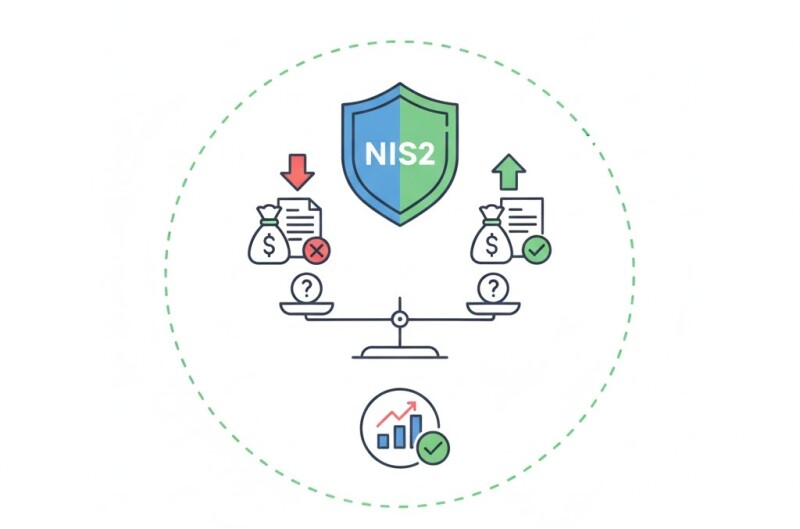
Budgeting NIS2 Compliance: What Costs the Most (and How to Save)
NIS2 compliance is not a one-off project—it’s an operating model. Budgeting wisely prevents overspend on shelfware and under-investment in the controls that auditors and incidents will actually test. Here’s where the money goes, and where to save without adding risk.
Where Costs Accumulate
- Asset visibility & monitoring (30–40%): Passive sensors, SPAN/TAPs, collectors, licenses.
- Access modernization (15–25%): MFA, PAM/jump hosts, VPN replacements, logging.
- Segmentation (15–20%): Firewalls, managed switches, TSN-ready upgrades in select areas.
- Process & people (10–15%): Training, incident drills, documentation, governance.
- Remediation & patching (10–20%): Test benches, LTS firmware, vendor services.
CapEx vs OpEx
CapEx covers hardware (sensors, firewalls) and initial licenses. OpEx includes SOC service, vulnerability intel feeds, certificate management, and periodic audits. For brownfield plants, expect a 60/40 split in Year 1, moving to 30/70 steady-state.
How to Save Without Cutting Security
- Risk-based scope: Prioritize lines with highest business impact first—tie spend to OEE and safety risk.
- Leverage existing tools: Use historian and firewall logs before buying new platforms; integrate rather than replace.
- Standardize vendors: Reduce integration tax; negotiate enterprise SBOM and LTS terms upfront.
- Shared services: Regional SOC for multiple plants; standardized jump host build.
12-Month Budgeting Roadmap
- Q1: Gap assessment, asset discovery, quick wins (remote access hardening).
- Q2: Deploy monitoring in two most critical zones; implement PAM and MFA.
- Q3: Segmentation rollout; vendor contract addenda (SBOM, SLAs).
- Q4: Incident drill, auditor pre-check, finalize LTS support for legacy devices.
KPIs for Financial Control
- Coverage: % of critical assets monitored.
- MTTD/MTTR: Detection and response times vs. targets.
- Patch compliance: % of devices at supported firmware versions.
- Audit readiness: # of open nonconformities.
Case Example: Multi-Site Electronics Group
By sequencing investments and reusing existing IDS-capable switches, a five-site manufacturer cut Year-1 NIS2 spend by 27% while meeting audit requirements. A standardized LTS agreement with two OEMs reduced emergency patches by 40%.
Related Articles
- NIS2 for Plant Managers: What You Must Do Before Your Next Audit
- Supplier Risk in the OT World: Contracts, SBOMs, and Patching
- From Policy to PLC: Mapping NIS2 Controls to the Factory
Conclusion
Budgeting NIS2 is about sequencing and reuse. Invest first where risk and audit scrutiny are highest, leverage what you already run, and lock supplier obligations in contracts. That’s how you reach compliance and protect uptime without runaway cost.












Interested? Submit your enquiry using the form below:
Only available for registered users. Sign In to your account or register here.